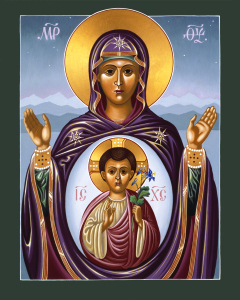
God


Peace and Wounds
John 20:19-31

The nurses at NIH thought it was horrible that we had to spend Easter there and couldn’t go home. But it was sunny and up in the 50s in D.C. Chicago had a white Easter from what I hear. In fact, when the nurses apologized about us having to stay there over the holiday, my response was, “It’s snowing in Chicago. The weather is much better here.” And for the the first time I saw what Craig Kocher talked about in last week’s Blogging toward Sunday: “Peace and wounds dine together on Easter.” Peace and wounds dine together on Easter. I didn’t have the words for it Easter Sunday, but that is what happened. For the Easter service at the NIH chapel, there were some very sick people. Two of them wore masks to protect them. They were probably in one of the cancer programs, and had little to no immune systems from their treatments. The young boy was also in a wheel chair, and you could tell by his eyes, he was so happy to be there. Sitting among people who were so sick, and yet so filled hope, this was an Easter where the resurrection, its power and hope were center stage, believed and proclaimed in full faith. Peace and wounds dined together.We normally don’t think about wounds on Easter Sunday. That’s what we did on Good Friday. The resurrection has happened. Now it’s time to get on to the “hallelujahs,” pretty dresses, hats, and Easter egg hunts. We are quick to move from the nails and spear of Good Friday, forgetting that Jesus still carried those wounds on the first Easter. It was when the disciples saw Jesus’ wounds that they knew it was him and began to rejoice. It wasn’t the glory of heaven that tipped them off: it was the nail and spear wounds that still showed, even after the resurrection.

Peace be unto you.” These are the first words Jesus says to his disciples after his resurrection. He appeared to Mary early that morning, but for some reason, he does not come to the disciples until that night. They’re huddled up in a room with the doors locked still scared of the authorities. Apparently they have not believed Mary’s story or her testimony, “I have seen the Lord.” They are sitting, locked in a room, trying to figure out what in the world has happened the last couple of days. Then out of nowhere, Jesus is there. There was no knock on the door. They didn’t hear a footstep. Jesus didn’t wait to be invited in. He was just there. In the midst of them. Giving them peace–his peace. The peace he promised them on the night before he died. Before his death, Jesus told the disciples: “Peace I leave with you; my peace I give to you. I do not give to you as the world gives. Do not let your hearts be troubled, and do not let them be afraid.” Jesus gives peace that isn’t dependent on what’s going on in the world or who is in charge. This peace flows from Jesus’ resurrection, not his political takeover. This peace flows from God’s power, not ours, not the government’s, or even the power of religious authorities. This peace comes from God, is given by God and sustained by God.

After Jesus gives them his peace, he shows them his hands and side. It is only then that the disciples believe that this is Jesus–raised from the dead–and they begin to rejoice. Jesus once again gives them God’s peace, and then commissions them: “As the Father sent me, so send I you.” In John the disciples do not have to wait until after the Ascension onto Pentecost for the Holy Spirit. The giving of the Holy Spirit is also less spectacular in John and much more intimate.

Craig Kocher notes that you have to get close to someone to breathe on them. You have to invade their personal space. Sharing breath is something couples and families share. It’s a familial intimacy; an act shared by lovers. It’s normally not how we pass the peace in the church. There are social graces to keep after all. Jesus did not think so. He comes close to the disciples. The same ones who abandoned him two days ago are now receiving the Holy Spirit through Jesus’ breath. The Spirit Jesus promised them would give them the words to say, would teach them all things, and always be with them was now fulfilled. They were equipped to go into the world as Jesus had and share the peace of Christ with that hurting and broken world.

But one of the disciples is missing on the night of the Resurrection: Thomas. Poor Thomas. I think he is one of the most maligned people in the Bible, and really for no reason. He’s nicknamed “doubting.” But which of the disciples believed that Jesus had been raised from the dead without first seeing him? None of them. The eleven didn’t believe Mary when she told them she had seen Jesus that morning. And Thomas didn’t believe those who told him they had seen Jesus earlier that night. Thomas wanted to see and touch the same thing the others had. They hadn’t believed until they saw Jesus’ wounds. Thomas is no different than the others. No more or less doubting. No more or less unbelieving. He’s just the same.

And Jesus gives him what he wants. Eight days later the situation hasn’t changed much. The disciples are still shut away in a room. Doors locked. Once again Jesus appears to them. Once again he doesn’t use the door or knock. He just comes. He once again blesses the disciples with peace. Then he turns to Thomas and says, “Put your finger here and see my hands. Reach out your hand and put it in my side. Do not doubt but believe.” There is no scolding or berating. There is no disappointment. Jesus simply gives Thomas what he needs to believe. He comes, and he shows his wounds. Seeing is apparently enough for Thomas, and he calls Jesus his Lord and God.

In our self made hells in our fears in the corners we get ourselves backed into, Jesus comes. Jesus comes and he shows us his love–see his hands, his side. He comes into fear and trepidation, and he says: “Peace.” Peace. Through the locked doors, the fears, the “what ifs” whispered behind hands. Into this fear-filled, cowardly crowd, Jesus comes. Jesus appears to them. There is no chiding. There is no “why didn’t you believe Mary?” Or “why didn’t you believe the others?” No, Jesus comes to the depressed and frightened disciples–he just appears. Locked doors no more. He appears in our midst and says one thing: Peace. He came to the men who did not believe the woman and said peace. He came to Thomas who did not believe the men and said peace.

He comes to us and says peace. He comes to our little worlds, to our locked rooms, he finds us walking and fishing, and he says peace. Jesus comes and gives us peace–his peace. But he doesn’t give us his peace to hoard and keep for ourselves. Like the disciples, with his peace, Jesus also gives his Spirit to go out in the world and share that peace. Easter is a triumphant celebration, but it is not always pretty. It is not all Easter lilies and bonnets. It comes with wounds. Not only the wounds of Christ, but the wounds of the world. We are sent with the peace of Christ to share that peace with a broken, wounded, and dying world.

I skipped over verse 23 the first time Jesus visited the disciples. After Jesus breathes the Spirit on them, he says, “If you forgive the sins of any, they are forgiven them; if you retain the sins of any, they are retained.” Of course Protestants, particularly Evangelicals have a big problem with this. Like the Pharisees, when Jesus healed the man lowered through the roof by his friends, we say “Who forgives sin but God alone?” Listen to how Eugene Peterson paraphrases this verse: “If you forgive someone’s sins, they’re gone for good. If you don’t forgive sins, what are you going to do with them?” When a person repents of sin, the sin is forgiven, and we are to recognize that. Parker Palmer wrote that “the mission of the church is not to enlarge its membership, not to bring outsiders to accept its terms, but simply to love the world in every possible way–to love the world as God did and does.” Of this verse Gail O’Day says, “The faith community’s mission is not to be the arbiter of right and wrong, but to bear unceasing witness to the love of God in Jesus”

Our job is to live the love, peace, and forgiveness of Jesus in our world. It’s not always easy, and it’s not always pretty, but that is what we are called to do. This wounded world will only be healed through and by the wounds of Christ.

The picture is from the He Qi Gallery.

Sphere: Related Content

The God of the Dead
Ezekiel 37:1-14; John 11:1-42

The rocking chair was old, but it had been well made, and it’s structure was solid. It had been handmade, and made well. Unfortunately subsequent owners didn’t know what to do with wood. The layers upon layers of paint testified to that. Why did people paint over perfectly good wood? Hadn’t they any sense? It was her summer project. She set it out on her screened in back porch. It was going to take a lot of paint remover to get the layers upon layers of paint off, and she’d need plenty of ventilation. She was also going to need plenty of Q-tips to get the paint out of the grooves, the ridges, and the hand chiseled design on the back. But that was okay. She was a patient woman, and she had the perfect place in her living room for the rocking chair. Day after day she smoothed the paint remover on and wiped it off, humming quietly to herself. She patiently removed the paint in the grooves, ridges and carvings with Q-tips. The wood–the real wood–was beginning to show through. It was a beautiful mahogany, it’s red undertones still vibrant. Who in their right mind would paint over this? she continually thought. Finally, it was done. All the paint was off. The wood was dull and looked lifeless, but not for long. She carefully sanded it. She had to go to three different hardware stores, but she finally found varnish that matched the tone of the wood perfectly. She put on two coats of varnish, letting it dry in between. Then she waxed it to a shine. It looked new. It was no longer the old beat-up, glumly painted rocker that she had nearly stolen for $15 at a garage sale. It looked liked the handcrafted antique that it was. No telling, what she could get for it if she wanted to sell it. But that she wouldn’t do. She was now going to enjoy the fruits of her labor. She picked up the rocking chair, eased it through the back door and placed it in the living room next to her big picture window. It would be a wonderful place to read, to crochet, or just to watch TV in the evening. Everyone who came over oohed and ahhed over it. Including the woman she bought it from. The woman she bought it from never believed that the red mahogany rocker was the same battered up rocker she had just wanted to get rid of.

Some people have the ability to see something beyond what it is to what it could be. There are also people who have the ability to see beyond what a person is to what he or she could be. Jesus was one of these people. He saw beyond tax collectors, sinners, and prostitutes to people God loved and God could transform. He saw beyond reputations–good in Nicodemus’ case, not-so-good in the Samaritan woman’s case–to the heart and offered to them what they really needed. Like God, Jesus never gave up on anyone: even the dead.

But let’s begin with God who didn’t give up on Israel, even after their idolatry and trampling on each other put them into slavery. In fact, the people thought they were dead and in their graves. But God doesn’t give up on them. At the beginning of Ezekiel’s ministry God called him to call the people to repentance, so that they would not go into exile. But the people did not listen and Jerusalem and the temple were destroyed. In the second half of his ministry, God called Ezekiel to reassure the people that God was still their God and still with them. Our passage today is one of the strongest statements God makes to the Jews in exile, and one of the most mind blowing promises in Scripture.

In a vision Ezekiel sees a field of dried, strewn out bones. It looks as if they died in battle, no one buried them. This was an ancient way of making sure people didn’t move onto the next world after death. This is how the Jews saw themselves. They were in captivity, and their land was gone. They had no hope. But God gives Ezekiel a vision, an incredible vision. These bones that have been lying in this valley for so long they are now dried up are commanded to life. And God doesn’t just do it. God tells Ezekiel to prophesy and tell these bones to come together, for flesh to form and muscles to develop. God worked through the prophet God had called instead of just doing it. When God renews life, restores life, resurrects life, God wants to work with us.

After the bones have bodies, they are still not living. So God commands Ezekiel to command the wind–God’s Spirit–to come and breathe life into the bodies. This would remind Ezekiel’s audience of the creation story in Genesis when God made the human out of clay and breathed life into the body. Now through a prophet’s word God’s Spirit comes and breathes life into the bodies that have raised from “dem dry bones.” Then Ezekiel is to tell the exiles just as God raised a living army from these dry bones, so God will restore the people to their land. They will once again be a nation, in their land. They are not without hope. They are not dead in their graves. God still loves them and restores them to their original covenant with God.

Whereas God restored and resurrected a nation that had been destroyed, in our New Testament reading, Jesus will resurrect a friend and restore him to his family. John tells us that Jesus loves Martha, Mary, and Lazarus. They have a close friendship. So it is surprising when Jesus does not go when Martha and Mary send news that Lazarus is sick. Jesus waits two days and then travels to Bethany. When he gets there, Lazarus has been dead and buried for four days. Martha meets Jesus before he gets to the house and tells him that she knows her brother would not have died if Jesus had been there. She goes on to tell Jesus that even now she knows God will grant whatever Jesus asks. Martha and Jesus go on to have this conversation:

Jesus said to her, “Your brother will rise again.” Martha said to him, “I know that he will rise again in the resurrection on the last day.”

Jesus said to her, “I am the resurrection and the life. Those who believe in me, even though they die, will live and everyone who lives and believes in me will never die. Do you believe this?”

She said to him, “Yes, Lord, I believe that you are the Messiah, the Son of God, the one coming into the world.”

Whereas Peter has the ultimate confession of Jesus being the Messiah in the other three Gospels, in John, it is Martha who gives the ultimate confession of faith. She is the one who proclaims Jesus to be the Messiah, the Son that God has sent into the world. She also makes this confession before Jesus raises Lazarus. In John this is the faith that is true, the faith that Jesus is looking for. Faith that believes that Jesus is the Son of God apart from the miracles and signs.

After this Martha goes to Mary and tells her that Jesus wants to see her. Mary goes to Jesus and tells him the same thing Martha said: Lazarus would not be dead if Jesus had been there to heal him. Then they go to the tomb. At the tomb Jesus is greatly troubled and angry. He is angry because God hates the things that destroy us. Jesus came to make sure that sin and death no longer had the last word. In fact, this is the last event in his public ministry. After this Jesus prepares for his “hour,” his death, and tries to prepare the disciples as well. Jesus decides that death will not have the last word with Lazarus and his sisters. Jesus orders the stone to be removed from the front of the tomb. The always practical Martha reminds Jesus that Lazarus has been in the grave for four days–there will be a stench. Jesus reminds her of what he told her when she met him on the road to her house. If she believes she will see the glory of God.

The stone is removed, and Jesus calls out “Lazarus, come forth!” Do you ever wonder how many people in the crowd fainted when Lazarus actually stumbled out of the tomb? Once again God’s people are told to help: they unbind Lazarus from the burial clothes he is wrapped in.

In both stories something or someone is given new life: Israel in Ezekiel and Lazarus in John. In both stories we see that God does not like the things that destroy God’s people: sin, death, and destruction. We also see that God chooses to work through God’s people: through Ezekiel, through those who rolled back the stone, and through those that removed Lazarus’ bindings. God also uses us to restore and bring new life into our worlds. These stories remind us that God has never stopped creating and re-creating. God still restores and gives new life. These stories tell us that God alone is life, and that God hates death and destruction. And God uses God’s people, God uses us, to continue to re-create, restore, and give new life to the world God created. Earlier in John Jesus said that God never stops working. God never stops working in the world, and God never stops working in us and through us to make us the people God wants us to be and to continue building God’s kingdom in this world.

Sphere: Related Content

Scripture Readings: Genesis 16:1-16; Psalm 95; Romans 5:1-11; John 4:4-30, 39-42

Meeting God at Wells
John 4:3-30, 39-42

Water. Life is dependent on it. In biblical times this meant wells and springs were life. And life was dependent on them. Women were the ones who drew water. They were at wells…a lot. Women not only drew water for their households. They also herded animals mostly sheep, to the wells to water them. Jan Richardson notes this about women and wells:

In God’s lexicon of water, wells have a particularly interesting place. Women at wells: more intriguing still. See a woman near a well, something momentous is bound to happen. It usually involves a person of the male persuasion, and it augurs a major change in the woman’s life. Genesis gives us a rich trinity of woman-at-the-well stories. In Genesis 21, God provides a well to a desperate Hagar and her son Ishmael, who lies near death in a waterless wilderness. Genesis 24 tells of a servant who finds Rebekah, Isaac’s bride-to-be, at a well. Another well serves as a signal of matrimony in Genesis 29, when Jacob meets Rachel at the well where she waters her father’s sheep. The matrimonial symbolism of wells finds a striking resonance in the Song of Songs….Particularly given the intimate, fertile link between women, wells, marriage, and motherhood, one might rightly wonder what the heck Jesus is doing, hanging out by a well with a lone woman, as he does in this week’s Gospel lection, John 4.1-42. It’s a curious thing for a single rabbi to strike up a conversation with a woman he finds at a well. But Jesus is a curious sort of rabbi, and so he wades into an exchange with a Samaritan woman who has come to draw her water at noonday.

Although wells have matrimonial links, two women did not meet husbands at wells: they met God. Richardson notes one of those times in Genesis 21. But Genesis 21 isn’t the first time Hagar had a rendezvous with God at a well or spring, our reading from Genesis 16 is.

Hagar was the first woman to meet God at a well. She was Sarah’s Egyptian slave. She had no say over what happened in her life. Sarah, desperate for a child, gave Hagar to Abraham as his concubine. After she became pregnant, Hagar may have thought Abraham would make her his second wife. After all, she was the one who would give him his long awaited heir, not Sarah. Hagar apparently started looking down on Sarah. Sarah complained to Abraham that Hagar looked at her with contempt. Abraham said Hagar was her slave, and she could do whatever she wanted to rein Hagar in. Sarah started treating Hagar harshly. Hagar ran away from Abraham and Sarah and ran into God.

God simply wants to know why Hagar is at the spring, and she tells God: she is running away from Sarah. God instructs her to go back and promises her that God will multiply her offspring, so that they cannot be counted. God also instructs her to name her son Ishmael, for God has heard her affliction. God extends the covenant promise to Hagar and her son. Hagar is the first woman, and the first person, in the Bible to name God. She calls God, the God who sees. God has seen her pain and affliction, and she has seen God. Hagar goes back and bears Ishmael. She remains in slavery to Sarah until 14 years later, after Isaac is born and weaned. Sarah wants no competition for her son and has Abraham send Hagar and Ishmael away. In the desert with no food and water, Hagar once again sees God, who reveals a well to her. God reassures her of God’s promise before Ishmael is born: he will grow into a great nation.

(more…)

Sphere: Related Content

A Visit in the Night

John 3:1-17


The night is good for all sorts of things: staying up until three in the morning reading a good book, writing, or watching infomercials. For students the wee hours are normally filled with finishing up required reading, writing papers and preparing presentations for the class in a few hours. Unfortunately the night is also the time when our worries, doubts, and fears can take on monster size proportions and keep us tossing and turning into the wee hours. Normally that’s when watching infomercials begin. But one particular night a man decided to seek out Jesus.


Nicodemus had heard about Jesus and may have even seen some of his miracles and heard Jesus’ teachings himself. Nicodemus wanted to know more about this itinerant rabbi who disrupted the buying and selling at the temple and was turning the religion that he knew on its ear. Nicodemus came at night. One reason was probably that he didn’t want his colleagues to know. Nicodemus was a Pharisee, a teacher of the Law, and one of the religious leaders of the people. The last thing he should be doing was going to an itinerant no-name rabbi from Galilee. But Nicodemus was also up. Scribes, Pharisees, and teachers of the Law normally studied the Torah at night in preparation for the teaching and debates of the next day. So it was also convenient for Nicodemus to come to Jesus at night. All his duties of the day were over, and he was left on his own to study the Torah into the wee hours. We’ll probably never know exactly why Nicodemus came at night, but it was probably a combination of those two things.


So Nicodemus has come to Jesus and he says that he and other people know that Jesus is a teacher from God. He knows the miracles of Jesus cannot be done apart from God’s presence. Then Jesus throws him for a loop. Jesus starts talking about being born from above to enter the kingdom of God. As far as Nicodemus is concerned, he is part of the kingdom of God. He is a Jew, descended from Abraham. He was born into God’s covenant people. Why would he need to be reborn to enter the kingdom of God? How could he be reborn?


But Jesus did not tell Nicodemus that he had to be reborn. He didn’t need another physical birth. Jesus said he needed to be born from above, by the Spirit. Born of God. John opened his gospel saying, “But to all who received him, who believed in his name, he gave power to become children of God, who were born, not of blood or of the will of the flesh or of the will of man, but of God.” Nicodemus had been born a Jew by the blood, but that no did not guarantee that he would see the kingdom of God. Nicodemus needed to acknowledge that Jesus was more than just a teacher sent by God. He needed to see and believe that Jesus is God’s Son. He needed to be born of the Spirit. Like the wind blows and no one knows where it is from or where it is going, so it is with the Holy Spirit. The Spirit works as she will birthing and giving new life to those who believe, not only Jesus’ miracles, but that Jesus is the Son of God sent by God to save the world. In fact, according to John believing the miracles is not enough–there must also be faith in the One that God sent.


The last we hear of Nicodemus in this passage is his question: “How can this be?” Although Jesus chides him for not understanding, he goes on to further explain to Nicodemus that he has been sent by God into the world. He has descended from heaven, and if Nicodemus will believe this, he will have eternal life. In John, eternal life is not something that begins after death: it begins when we believe that Jesus is God’s Son, and it is through his crucifixion and resurrection that we come into God’s kingdom. Even this early in his ministry, Jesus talks of his death on the cross. Eternal life is not always an easy road. Jesus also lets Nicodemus know that he is not being condemned. God did not send him to condemn the world but to save it. God sent Christ because of God’s love for the world, for those made in God’s image. God’s love has compelled the Incarnation, and it is God’s love that Jesus lives out.


We don’t know what Nicodemus’ decision was. John never tells us. Nicodemus’ last spoken words are “How can this be?” But it is not the last we see of him in John. He appears twice more. In John 7:50 he defends Jesus to the Sanhedrin and asks them to hear him out. We last see him at the foot of the cross in John 19 when he and Joseph of Arimathea took Jesus’ body from the cross and prepared it for burial. Nicodemus might have asked questions and had doubts, but he was not given up on. He appears at the beginning of John’s gospel and hears one of Jesus’ first prophecies of his death and resurrection. At the end of the Gospel he at the cross and tomb. Did he become a disciple? Only God knows. The same God who loved him enough to take the time to explain being born from above and eternal life to him.


It doesn’t matter why or when Nicodemus came to Jesus. What matters is that he came. He came to Jesus and listened to Jesus. He may not have understood at first, and he asked questions, but Jesus answered his questions and explained what was necessary for Nicodemus to become part of the kingdom of God and have eternal life. It is the same for us. It doesn’t matter why we come to Jesus or when. The important thing is that we have come and continue to come. We can have our doubts and ask questions just as Nicodemus did. Jesus still gives answers and elaborates. We can even come to Jesus for the wrong reasons: because we want signs or an easier life, money, or health. Jesus will correct us just as he did Nicodemus.


Jesus will not give up on us just as he did not give up on Nicodemus. Although Nicodemus did not seem to get what Jesus was telling him in this chapter, he stands at the cross in chapter 19 and helps lay Jesus to rest. He heard Jesus’ prediction of being raised up for salvation and eternal life. He saw how far God would go to show God’s love for all humanity. He saw first hand God’s great love for the world. In the same way God continues to show us God’s love. Jesus continues to point to the cross and say this is how much God loves you. This is how much I love you. We are never given up on.


Jesus continues to beckon us to come and believe. Not to believe that he will make our lives peachy and nothing bad will ever happen to us again. But to believe that he is the Son of God, the one God sent into the world, so that we can have a relationship with God. We can have eternal life as God’s sons and daughters in God’s kingdom. People will always want signs and miracles and sometimes we do too. And sometimes we get them. But they can never be the basis of our belief. The foundation of our belief must be the Incarnation: that God has become flesh and lived among us. I love how Eugene Peterson translates John 1:14 in The Message: “The Word became flesh and blood, and moved into the neighborhood.” God became fully human and moved into our neighborhood. This is the foundation of our faith. The miracles and signs are nice when they come, but we must remember the one sign Jesus gave to believe in him. In John 2 he tells those who ask him what authority he has to disrupt buying and selling in the temple that “destroy this temple, and in three days it will be raised up again.” He was speaking of his death and resurrection. In Matthew, Mark, and Luke, he says the only sign given will be the sign of Jonah. Just as Jonah was in the belly of the big fish for three days and nights, so the Son of Man will be in the heart of the earth. The only sign our faith rests upon is the death and resurrection of Christ. The Incarnation and Resurrection are the signs our faith rests upon–not the miracles of healing, exorcism, or food.


But when we get hung up on those miracles Jesus does not give up on us, just as he did not give up Nicodemus. Remember Nicodemus first came because of the signs and miracles Jesus was doing. That’s how he knew Jesus was sent from God. That’s where Jesus started and lead him to see that wasn’t enough. Nicodemus had to see that Jesus was God. Just as we need to see that Jesus is God.


Although Jesus is a little hard on Nicodemus, he tells Nicodemus God’s motive for sending the Son and for the toughness that tries to change his focus from Jesus being a teacher to Jesus being the Messiah: God’s love. This is what we need to remember too as Jesus continually turns our gaze away from lesser things to remind us of what is really important. Jesus continues to redirect our focus because of God’s love. It is God’s love that compels us to change and become more Christlike. Just as it was God’s love that led us to confess Jesus as our Savior in the first place. Although condemnation and “hellfire and brimstone” are popular ways for some in Christianity to try to get people to come to Jesus, that is not what God did. In fact, John 3:17 makes it very clear that Jesus did not come to condemn anyone in the world, but to show the love God had for the world and give us a way into eternal life with God.


As we walk through Lent, examining our lives, and repenting of the places we have not given to God or walked away from God, we need to remember why God is leading us through this time: because God loves us. God wants to have a more intimate relationship with us. God want us to be more Christlike. God wants us to live in the abundant life and eternal life that we can have in Christ. Walking through Lent can be long and dark, but the God who loves us walks with us, telling us what we need to do, just as Jesus told Nicodemus what he needed to do to have eternal life with God. God’s discipline and judgments are always to lead us deeper into eternal life and closer to God.

The picture is from the St. John’s Bible.

Sphere: Related Content

Sally has a beautiful, haunting poem about The Samaritan Woman up on her site.

Instead of simply celebrating Martin Luther King Day, Dustin Wax at Lifehack has a list of things we can do to continue making King’s dream a reality in 12 Ways to Make MLK’s Dream a Reality. Here are a couple of them:

Re-examine what you “know”: It turns out our minds are full of racist stereotypes, even among the most saintly people. We act every day on things we “know” are true, without realizing that those “facts” are grounded only in stereotypes, not reality. Consider:

  • The lowest violent crime rates in the US are found in Hispanic neighborhoods.
  • White teens are more likely to use and sell drugs than any other teenagers — even drugs like crack that we associate with minorities.
  • Almost all school shootings have been carried out by white students.

None of these facts conforms to our expectations, which are shaped more by the stereotypes we’ve internalized and the sensationalist media than by actual experience.

Think community: Kant’s Categorical Imperative states: “Act only according to that maxim whereby you can at the same time will that it should become a universal law”. What he meant in a nutshell was that you should act the way you wish everyone would act. Don’t just ask yourself if your behavior is in your own best interest, but if it also makes your community better (which, if you think about it, is also in your best interest).

In The Outrage of Outsiders: Why So Many People Dislike Christians (Hat tip to Gord), Journey with Jesus has an article about a three year study that resulted in David Kinnaman’s book unChristian: What a New Generation Really Thinks about Christianity… and Why It Matters. He found that an overwhelming majority of young adults view Christianity with quite a bit of hostility. They see us as judgmental, bigoted, and extremely critical and unaccepting. All I can say is can you blame them? When you have people constantly telling you (or yelling at you) that you’re going to hell for one reason or another, I’d have to say you wouldn’t like them. May be the church (particularly the evangelical church) needs to take its cue from Jesus and the Christians in the New Testament instead of the “hellfire and brimstone” preachers of the 30s and 40s revivials.

Following the example of Jesus, the first Christians broke down social barriers. They disregarded religious taboos that judged people as ritually clean or unclean, worthy or unworthy, respectable or disrespectable. They subverted normal social hierarchies of wealth, ethnicity, religion, and gender in favor of a radical egalitarianism before God and with each other: “There is neither Jew nor Greek, slave nor free, male nor female, for you are all one in Christ Jesus” (Galatians 3:28).

In a word, the first believers were generous. They demonstrated authentic transparency, not moral superiority or ulterior motives. Like their Lord, they exuded compassion rather than condemnation. They lived out of gratitude not fear, and had a reputation for empathy rather than fault-finding. The first followers of Jesus were people of self-sacrifice, not self-interest. They insisted that God was like a tender father, not a vindictive tyrant, and encouraged every person without exception to believe what the psalmist said: “This I know, that God is for me” (Psalm 56:9).

Pastor Dan over at Street Prophets reminds the right-wing, anti-immigration crew that they Can’t Fool the Faithful: Immigration is a Moral Issue, Not a Political Football. American Christians are going to have to decide are we going to be Americans first or Christian?

Pastors and people in the pews know that inhumane raids, deportations, local anti-immigration ordinances, and racist sentiment against various groups of immigrants fly in the face of the Lord’s admonitions to not “oppress the stranger” (Ex. 23:9) or “pervert the judgment of the stranger” (Deut. 24:17). Instead, the Lord taught us to “love the stranger as ourselves” (Lev. 19:34), and “allow the stranger to live among us” (Lev. 25:35). Christ’s teachings in the New Testament reaffirm the Lord’s commandments of inclusion by urging us to welcome the stranger. He promises that as we provide for the stranger (or “alien,” NIV), we are serving Him (Matt. 25:35-40). How many of these politicians really want to deport Jesus?

And may be those anti-immigration people need to remember who the illegal immigrants of 300 years ago were. Bet the Native Americans wished they had built a big, honking wall right after we started showing up. (I saw a great cartoon of this, but I don’t remember where. If you know, leave a link in the comments, and I’ll update this post.)

Sphere: Related Content

Gifted for Leadership’s most recent post is What Our Feminity Means. Here is an excerpt that sums up the entire post:

The benefits of modesty aside, femininity became a new way to behave, a role I played, a corset I wrapped around my soul and tightened down to get approval. Femininity quickly became something I did to get what I needed or wanted in life. It was something to use, not something I owned.

I don’t think this is what God intended when he created Woman. In Genesis 1 God wanted to splash more of the Trinity onto Earth. So God made Man and Woman to mirror his image (Gen 1:27). Femininity in its truest, original sense was one way God’s image appeared, and this image was not weak, catty, emotionally crazy, or inferior because God is none of these things. Femininity wasn’t a role Eve played to get what she needed; femininity was part of who she was. Even after Eden, as broken image bearers, we reflect God. If a child is humble, she mirrors her God. If a man is gentle, he mirrors his God. If women are feminine in the original sense, we reflect our God.

My main problem with this is that “feminine” and “femininity” are social and sociological constructs, not biblical or theological terms. Genesis 2:26-28 states:

Then God said, “Let us make humankind in our image, according to our likeness; and let them have dominion over the fish of the sea, and over the birds of the air, and over the cattle, and over all the wild animals of the earth, and over every creeping thing that creeps upon the earth.” So God created humankind in his image, in the image of God he created them; male and female he created them. God blessed them, and God said to them, “Be fruitful and multiply, and fill the earth and subdue it; and have dominion over the fish of the sea and over the birds of the air and over every living thing that moves upon the earth.”

God did not make “masculine” and “feminine” in God’s likeness. God made Male and Female in God’s likeness. And what does this image and likeness look like? According to these verses it means that man and woman subdue the earth and rule it as well as being fruitful and multiplying. Both the man and woman are commanded to have a family and to have a vocation.

In Genesis 2, we found that God created a human being and placed the human in the Garden of Eden. God decided that it was not good for the human to be alone, so God made an ezer cenegdo for the human. After the ezer is made there is now man and woman. What exactly is an ezer? Outside of Genesis 2, it appears 20 times in the Bible*. Seventeen of those times, ezer is used to describe God. In each instance military imagery is used to describe God coming to help Israel against its enemies. I found Psalm 146 particularly fascinating:

1 Praise the LORD! Praise the LORD, O my soul!
2 I will praise the LORD as long as I live; I will sing praises to my God all my life long.
3 Do not put your trust in princes, in mortals, in whom there is no help.
4 When their breath departs, they return to the earth; on that very day their plans perish.
5 Happy are those whose help [ezer] is the God of Jacob, whose hope is in the LORD their God,
6 who made heaven and earth, the sea, and all that is in them; who keeps faith forever;
7 who executes justice for the oppressed; who gives food to the hungry. The LORD sets the prisoners free;
8 the LORD opens the eyes of the blind. The LORD lifts up those who are bowed down; the LORD loves the righteous.
9 The LORD watches over the strangers; he upholds the orphan and the widow, but the way of the wicked he brings to ruin.
10 The LORD will reign forever, your God, O Zion, for all generations. Praise the LORD!

After telling the congregation not to put their trust in human leaders, the psalmist proclaims: “Happy are those whose ezer is the God of Jacob, Rachel, and Leah!” (author’s paraphrase). The psalmist then goes on to describe how God helps Israel: God executes justice for the oppressed, gives food to the hungry, sets prisoners free, opens the eyes of the blind, lifts up those who are bowed down, and loves the righteous. God watches over the strangers, upholds the orphan and widow, and brings the way of the wicked to ruin. God’s help is not to dominate the people, but to lift them out of poverty and hunger, to set them free from oppressors and oppressive debts (most people in prison then were in debtor’s prison: they could not pay their debts). God helps the orphans and widows: those in society who have no one else to help them and be strong for them. God uses God’s strength and power to help those that no one else will help because they are seen as weak, poor, and marginal. Again we see military imagery used to describe God as Israel’s ezer or helper.

Carolyn Custis James does a wonderful job of exploring the word ezer and its military connotations in her book, Lost Women of the Bible: Finding Strength & Significance through Their Stories, in the chapter on Eve. She translates ezer as “strong helper.” Woman was created in the image of God to be a helper to the man as God was a helper to Israel. But this does not make her superior to the man. That’s where the second word of the phrase comes in: cenedgo, which means standing or sitting face to face. It means equal. So the full translation of ezer cenedgo is a powerful helper equal to. Woman was created to be a powerful helper equal to the man the way God is a powerful helper to God’s people.

Man and woman are created in God’s image to image God in our world. Psalm 146 gives a description of what God is doing in the world. God is not only fighting enemies and saving God’s people. God is also taking care of those who can’t take care of themselves. This means that both man and woman should be doing the things God does to image God to our world. This includes fighting systemic and spiritual evil, but it also includes tenderness and compassion toward those who are poor, needy, and those whom society overlooks.

I want to look at two women in the Bible; one in the Hebrew Scriptures and the other in the New Testament. Deborah is the woman of Hebrew Scriptures that I want to look at. We are introduced to Deborah in Judges 4. She is a prophet and judge, and she leads Israel. The Israelite people come to her with the problems and disputes, and she mediates God’s will as Moses had once done. She is married, but she is a working woman. God has called her to be a prophet and judge, and she has answered. When God commands Israel to go to battle with their enemy Sisera and the Canaanites, Deborah summons the military commander Barak, and tells him what God says. But Barak will not go into battle without God’s representative, Deborah. Both Barak and Deborah lead Israel’s armies into battle. Here we see a man and a woman working together to fight the people’s enemies and obey God’s words and will. And irony of ironies is that Deborah’s husband, Lappidoth, is probably in the troops following his wife.

Deborah, Barak, and Lappidoth do not resemble or act according to the societal constructs of masculine and feminine, but they are obeying God and building God’s kingdom side by side. Leading men into a battle is not considered “feminine” in Western society, but Deborah was obeying God. God called her to lead her people and protecting them from their enemies. She was an ezer who was imaging God in her every word and action.

The next woman I want to look at in the New Testament is Priscilla (or Prisca). Priscilla ran a business with her husband, Aquilla. They made tents together. They worked in Corinth with Paul where they heard the Gospel and were saved (Acts 18:1-3). Later the couple would meet Apollos who had heard only of John’s baptism and not heard of Jesus’ death, resurrection, and ascension or the baptism of the Holy Spirit. When Priscilla and Aquilla heard him, they took him aside and “explained the Way of God to him more accurately” (v. 26). They also lead a home church when Paul wrote his letter to the Romans (Romans 16:3-5). It is very odd during this time for a wife’s name to be mentioned before her husband’s, and yet four times Priscilla’s name is put before her husband’s. Many scholars believe that she was the dominant one in ministry: the teacher and pastor of the churches that met in their home.

Again we see a man and woman working side by side making a living and building God’s kingdom. There is no mention of what is masculine and what is feminine. They work together as the team God created them to be.

I think being made in male and female in the image of God has very little to do with modern notions of femininity and masculinity. It has everything to do with faithfully imaging God to our world by obeying God’s callings on our lives and working together–both men and women–to build the kingdom of God on earth.

*Exodus 18:4; Deuteronomy 33:7, 26, 29; Psalm 20:2; 33:20; 70:5; 89:19; 115:9-11; 121:1-2; 124:8; 146:5; and Hosea 13:9.

The New Revised Standard Version is used for biblical quotes unless otherwise noted.

The picture is Thomasz Rut’s Insuspenco.

Crossposted at Emerging Women.

Sphere: Related Content

It’s not easy to write sermons with migraine-like sinus headaches, but I have done it. Hopefully, I won’t have an uber-headache while preaching it tomorrow. I’m posting it tonight because I have decided to take a Sabbath from the computer on Sundays.

Tables of Love

Scripture Readings: Psalm 100; Deuteronomy 26:1-11; Philippians 4:4-9; John 6:25-35

When I think of tables, I think of eating with friends and family. Through the years these tables have taken different shapes and forms. Sometimes it’s just me and another person and at other times there could be 15-20 of us gathered around. Sometimes it’s quiet conversation and other times a cacophany of chatter, dishes, and someone yelling down the table to get someone else’s attention. I’m Irish-Italian; we tend to be a loud bunch. Of course that didn’t change when I headed off to seminary, and all of my friends were religion geeks like me. There was still a lot of talking over one another, around one another, and yelling at someone in order to get a word in edgewise. I felt right at home.

The table I normally think of is our family table growing up. Mom, Dad, my sister and me every night for supper. We didn’t have very many family rules set in stone, but eating supper together was one of them. When friends were over, they ate with us. Same thing if family visited: eating supper together never changed except when we slept over at a friend’s or had a school function. Some nights there was a lot of chatter, some nights we played Jeopardy more than we talked, and other nights we ate in relative silence because we were tired. The ebb and flow of activity may have changed but supper itself did not. We ate one meal as a family at the table everyday. Period.

One of the hardest things to get used to when I moved out and started living on my own was eating alone. It seemed odd, wrong. And not just because of family dinner. Before college I had always eaten breakfast with my sister, lunch with friends, and dinner with the family. In college I always ate with friends or a the family that adopted me at church. Eating by myself bothered me more than living by myself. In the movie Under the Tuscan Sunher neighbor invites Francis over for supper saying, “It’s not healthy to eat alone.” I absolutely agree with him.

In fact the Mediterranean people know how to do supper. I lived in Barcelona for a year as a Nazarene in Volunteer Service or NIVS for short. I loved their attitude about food. Food was something to be enjoyed, not scarfed down. I am a slow eater. I always have been and I will stubbornly remain so. I get teased because I refuse to scarf my food down in order to “do” something more important. What’s more important than nourishing yourself? And I don’t believe you can nourish yourself if you inhale your food. I fit right in in Spain and with the Mediterranean mindset: food is to be enjoyed and preferably enjoyed with family and bunch of friends. They take supper seriously. There it is a three hour affair with three or four courses and a lot of conversation. Talking, joking, sharing the day, getting caught up. It’s relaxed. Everyone is enjoying themselves. Everyone is enjoying the food. I fit right in. I found out the Italian genes I got from my full-blooded Italian great-grandmother ran true in my blood. They somehow skipped the rest of family.

How the Mediterraneans view supper is very much how people in both the Old and New Testaments viewed supper. Breakfast was some bread, probably left over from the night before. Lunch was at work and normally a piece of dried fish and what ever fruit or vegetables that were in season. But supper–supper was different. You were paid for your work at the end of the day. You went shopping then came home, and the whole family–and you have to remember in the Bible this would be three generations who lived close to each other–all of them would get together and eat supper. It was a relaxed, joyous time for the family. They had food, they had each other. They enjoyed their day’s labor at the end of the day. And they took their time. This meal was not to be rushed. It was to be savored and enjoyed. It was the only time the entire family ate together.

(more…)

Sphere: Related Content

« Previous PageNext Page »