Lenten Discipline: Fasting

Fasting from food is the normal fasting practice during Lent. Although now people fast from many things: a particular food group, sweets, TV, or the internet. On Street Prophets Starwoman posted a great post on fasting last year. Fortunately she linked to it in yesterday’s coffee hour for those of us who missed it the first time or just forgot about it. Here is an excerpt:

Fasting and Gratitude

This is a simple application of the old saying Absence makes the heart grow fonder. Fasting can sharpen our appreciation of what we do have, what we may otherwise take for granted.

Americans have a lack of appreciation for the things we have; we waste so much that what we discard in one day could feed all of Africa.
– Brother V., Franciscan missionary to Africa for 17 years

Physical hunger, Spiritual hunger

For me, this is the most compelling reason to fast. Hunger is frequently used metaphorically in the Jewish and Christian scriptures, and I suspect in other scriptures as well. We hunger for God, we hunger for justice, we hunger and thirst for mercy, we thirst for God as a deer thirsts for running streams.

Let your body teach you what it means to hunger.

What do you hunger for?
Who or what is the Divine for which you hunger?
What do you hunger to see in the world?

She also has tips for those of us that have trouble fasting because of low blood sugar levels. I stopped fasting because of low blood sugar and what it did to me after 3:00. With her advice, I think I am going to fast until after the Ash Wednesday service (8:00 p.m.). And if it goes well fast on Fridays this Lent. Thank you Starwoman.

Lenten Thoughts and Practices

I found two artlices on Lent that I really enjoyed. The first one describes why Christians need to observe Lent, and the second one offers a Lenten discipline.

In Images of Lent, Ron Rolheiser says:

Religiously the richest image we have for lent is the image of the desert, of Jesus going into there voluntarily to fast and pray. Scripture tells us that Jesus went into the desert for forty days and, while there, he ate nothing. This doesn’t necessarily mean that, literally, he took no food or water during that time, but rather that he deprived himself of all physical supports (including food, water, enjoyments, distractions) that protected him from feeling, full force, his vulnerability, dependence, and need to surrender in deeper trust to God. And in doing this, we are told, he found himself hungry and consequently vulnerable to temptations from the devil – but also, by that same token, more open to God.

Scot McKnight at Jesus Creed challenges his readers to practice this discipline through Lent:

I am asking my blog’s readers to consider a challenge for Lent. No, it is not giving up anything. Instead, it helps move Lent into 40 days of living out the gospel: I am asking you to begin and end each day of Lent (beginning Wednesday) by reciting the Jesus Creed. And, whenever it comes to mind throughout the day, I am asking you to recite it again. In your evening recitation of the Jesus Creed, we are asking you to give some moments of recollection to confess any sins against the Jesus Creed throughout the day. |inline

Prayer Update

I went to the doctor for the lump I found below my armpit, and she said that it was probably a swollen or blocked lymph node. Cancer normally does not develop where the lump is. I have an ultrasound appointment tomorrow. I didn’t think I would get in that soon, but when I called for the appointment this morning, the woman I talked to had just taken a cancellation, and she slipped me in. Thank you for your prayers.

Just When You Think…

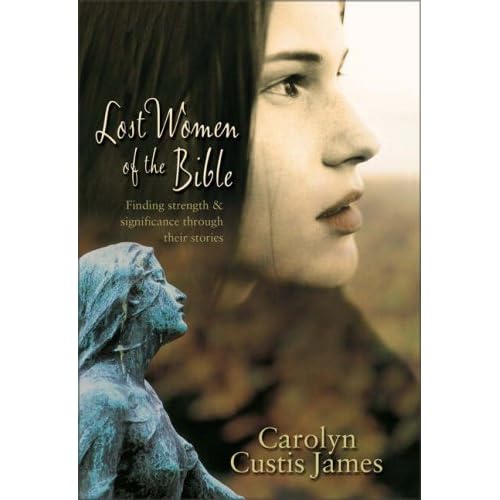
Just when you think there are ten people reading your blog, including family, you find out differently. Last week I mentioned in a post how disappointed I was in the last chapter of Carolyn Custis James’ Lost Women of the Bible. Today I received an email from Carolyn:

I deeply appreciate your comments about my book, Lost Women of the Bible. I take feedback seriously and am always interested in finding ways to improve and communicate more effectively. I must confess, however, to feeling saddened by your disappointment in the final chapter on Paul and the Women of Philippi, particularly because your disappointment was tied to something my book (and that chapter in particular) never intended to address.

In the chapter in question, I am addressing an aspect of the problem women face in the church that impacts every Christian woman, and not simply the women who feel called to pastoral ministry. My goal is to establish the fact that men (even men who are senior pastors) need women in the battle with them—ministering at their side and also ministering to them personally. That is why I’m talking about male pastors. So the logic goes, if these men need us, then surely every man needs the spiritual ministries of women. I doubt female pastors would have any difficulty in valuing the ministry of other women with and to themselves, so I wasn’t addressing them.

My books address a general audience. I purposely do not address specifics about what women can or can’t do in the church. I intentionally do not take a public position on the ordination question. I leave that discussion to others. I know this frustrates many readers. My purpose is to get both sides to look at the deeper issue of why the spiritual gifts and contributions of women are not just permissible, but essential to the whole body of Christ. I hope my books cause church leadership to wrestle with how that looks in their particular setting. It won’t look the same in every church, but every church needs to think this through and hopefully, begin to make progress in how men and women serve God together.

I think it is very cool that Carolyn, not only keeps track about what is being said about her books, but takes the time to email to correct reader mispercecptions. This was my response:

Thank you for writing me about Lost Women in the Bible. Thank you for clarifying what your purpose was for the book. I will re-read the last chapter with what you’ve said in mind. I really did like the book, and the scholarship you did was excellent (I’m a geek and a sucker for really good scholarship). You are also a great storyteller. I’m studying both Lost Women and When Life and Beliefs Collide because I am still trying to figure out how to keep a conversational tone throughout my writing instead of vacillating between conversational and academic.

I do think you are filling a huge gap for women with this book. When it comes to books about women in ministry it seems women are caught between women’s and children’s ministries or going for ordination. It’s good to see a book for women that does holistically address women’s spiritual gifts and both women and men working side by side to build God’s kingdom. I am glad that how I read the last chapter was not what you intended. More than likely I was reading through my own experience and what I thought should be there instead of staying with what you stated in the introduction was your intention with the book.

Thank you so much for taking the time to email me. It means a lot that you keep an eye out on what is being said about your books and taking the time to respond.

I am going to re-read the last chapter, and I have a feeling that my response is going to be different. I also have a feeling that the book review is going to be different as well.

Transfiguration Sunday: A Glimpse of God

Jesus: A Glimpse of God

Matthew 17:1-9


I am not ready for Lent. And I did not want to leave Epiphany this year. In fact, as far as I’m concerned Lent is coming far too early this year. So I found myself dragging my feet writing this sermon. Fleming Rutledge said that on this Sunday “the church turns away from the light of Epiphany into the shadows of the Cross.” I find myself like Peter: wanting to build and stay where the light is. But Jesus is on his way to Jerusalem–not to overthrow the Roman rulers and rule an independent Israel. Jesus is on his way to Jerusalem to die. In Matthew 16 right after Peter’s confession of faith and right before today’s passage, Jesus predicted his suffering, death and resurrection. The Transfiguration is the first step toward the Cross. Even with Jesus’ prophecies and warnings, the disciples weren’t ready for the trip to Jerusalem. And most of the time, no matter how much we prepare, we are not ready for the long shadows of Lent. Which is the reason for the Transfiguration. This really is a pivotal Sunday. This is the last Sunday of Epiphany, but we are already looking to Ash Wednesday, just as the glorified Jesus is already looking toward Jerusalem.


But before we begin the long journey to Jerusalem, we get a glimpse of who it is who is calling us to deny ourselves, take up our crosses and follow him. Jesus leads the disciples up to the top of the mountain. To a place where humans and gods met. It doesn’t matter where you go in the world, mountain tops are places to encounter the divine. The Celts called these thin places: places where this world and the spiritual world intertwine, and it is easy to step from one world into the other. Jesus takes the disciples to this thin place. And there his divinity is revealed: “his face shone like the sun, and his clothes became dazzling white.” God’s glory, the same glory that filled the tabernacle in the wilderness and then Solomon’s temple, emanates from Jesus. Then two other men who met God on mountain tops appear: Moses and Elijah. We read of one of Moses’ mountain top encounters with God in today’s reading from Hebrew Scripture. Light and clouds shroud Mt. Sinai as Moses goes up to receive God’s commands. Elijah met God in sheer silence on a mountain. Now time is put aside as the lawgiver and the prophet of prophets meet with the Son of God on another mountain. It’s a scene we can’t quite imagine or get our minds around. We’re not supposed to, just as the disciples did not. As usual it is Peter who opens his big mouth before he’s really thought about what he’s saying. He wants to build booths for all three and stay on the mountain for awhile. We all do. None of us likes to move on from the glory of God when faith is easy and God’s presence is so evident in our lives. But move on they have to do as do we.


As clouds envelope the mountain top God once again approves of what Jesus is doing: “This is my Son, the Beloved; with him I am well pleased; listen to him!” The same voice that approved of his baptism now approves of his obedience to go to Jerusalem. God tells the three disciples to listen to him. In the powerful presence of God in light, clouds, and hearing his voice, the disciples fall to the ground. In her sermon on the Transfiguration, Madeline L’Engle said:


The story of the Mount of Transfiguration is also strong stuff, not to be understood in the language of provable fact. Jesus, like Elijah, stands “upon the mount before the Lord.” He took with him Peter and James and John, and extraordinary, incomprehensible things came to pass. Jesus’ clothing became shining, and Elijah himself appeared to Jesus in the brilliance, and Moses came, too, and they talked together, the three of them, breaking ordinary chronology into a million fragments. And then a cloud overshadowed them, as it overshadowed Moses on the mount, and the voice of God shouted out of the cloud.


Strong stuff. Mythic stuff. That stuff which makes life worth living, which lies on the other side of provable fact. How can we be Christians without understanding this? The incarnation itself bursts out of the bounds of reason. That the power which created all of the galaxies, all of the stars in all of their courses, should willingly limit that power in order to be one of us, and all for love of us, cannot be understood in terms of laboratory proof, but only of love. And it is that love which calls us to move beyond the limited world of fact and into the glorious world of love itself. Of Jesus standing with Moses and Elijah, both of whom had themselves stood on the mount and been illuminated by God’s glory. When Moses went down from the mountain his face was so brilliant that people could not bear to look on him, and he had to cover his face in order not to blind them.


The brilliance of God is indeed blinding, and we need myth, story, to help us bear the light.


At the Transfiguration we see the incarnation through divine eyes. This is what God sees. We can only catch a glimpse because of the brightness. At the same time the Transfiguration is full of revelation and shrouded in mystery. But it is this mysterious light and glory that will see us through the long days of Lent as we travel in the shadow of the cross. In her sermon, Madeline continues on why we have a hard time understanding Jesus:


Jesus was not a westerner and He did not have a western mind, which is perhaps why He is so frequently misunderstood by the western mind today. His first miracle was a lavish turning of a large quantity of water into very fine wine at a wedding feast where the guests had already had a lot to drink. He was not interested in the righteous and morally upright people whom He saw to be hard of heart and judgmental, but in those who knew they were sinners and who came to Him for healing. His birth was heralded by angels, visited by adoring shepherds, and resulted in the slaughter of all Jewish infants under the age of two.


If Jesus was a threat to Herod two thousand years ago, He is still a threat today because He demands that we see ourselves as we really are, that we drop our self-protective devices, that we become willing to live the abundant life He calls us to live. We retaliate by trying to turn Him into a wimp who has come to protect us from an angry father who wants us punished, and the retaliation hasn’t worked, and we’re left even more frightened and even more grasping and even more judgmental.


And that is what Lent is about: seeing who we really are and letting Christ lead us into that abundant life that is full of the love of God. It is a season of repentance and self-examination. One thing the Transfiguration makes clear is that we are not God. But as we walk the days of Lent, seeing our humanness good and bad, we have the light of the Transfiguration to remind us of who our God is. And it helps us make it to Easter when not even death can hold onto the light that has come into the world.


But we have three more days before Lent begins, and during this time we can dwell and meditate on the mysterious light of God in our lives and world. This is the light that will sustain us through Lent until Easter.


The picture is from the St. John’s Bible.
Madeline L'Engle on the Transfiguration

Strong stuff. Mythic stuff. That stuff which makes life worth living, which lies on the other side of provable fact. How can we be Christians without understanding this? The incarnation itself bursts out of the bounds of reason. That the power which created all of the galaxies, all of the stars in all of their courses, should willingly limit that power in order to be one of us, and all for love of us, cannot be understood in terms of laboratory proof, but only of love. And it is that love which calls us to move beyond the limited world of fact and into the glorious world of love itself. Of Jesus standing with Moses and Elijah, both of whom had themselves stood on the mount and been illuminated by God’s glory. When Moses went down from the mountain his face was so brilliant that people could not bear to look on him, and he had to cover his face in order not to blind them.

I found this doing some research for my sermon tomorrow from 30GoodMinutes.org (yes, I am way behind).

Short Hops: Churches, Abbeys, and Sexism in Politics

Chuck Warnock has a very through-provoking post up: 10 Marks of the Church-as-Abbey. Here are two of the marks:

Hospitality. The Celtic abbey was open to all who needed its hospitality and help. Monks, even those fasting, would interrupt their discipline to greet and welcome those who came into the abbey’s confines. Welcoming the stranger is a vital part of the abbey’s ministry.

Economics. The abbeys were self-supporting, engaged in cultivating fields, raising livestock, operating public markets, and giving employment opportunities to the community. I read about a church the other day that also operates a farmers’ market, and has been doing so for years. I am exploring the agrarian movement, particularly as it attracts followers of Christ. More on that later.

He also has this post following up on the economics of the church-as-abbey, The Abbey Church and Economics. When I think of the church I want, I think like this. I want a community that is very involved in the larger community. I need to get one of the books he recommends. I already have Thomas Cahill’s How the Irish Saved Civilization (Hinges of History), which I loved (may need to review it). I now need to add George Hunter’s The Celtic Way of Evangelism: How Christianity Can Reach the West…Again.

Julie Clawson has a great post up titled Sexism Sells.

It is hard to avoid given the current political situation, but it serves as a sad reminder of how normal sexism is in the daily life of many people. I’ve mentioned that I am not a Hillary supporter, but I am becoming more and more upset at how she is being used as an excuse to trash women. I am sick of hearing news commenters ridiculing Hillary because she is a woman. I’m sick of hearing, “we can’t have a woman president because then other countries wouldn’t respect us.” (do people realize that most other countries are far ahead of us in electing women leaders!!!). It’s not about her it is about women, she is just an excuse to be sexist on national television.

How many years ago was Margaret Thatcher prime minister of England? The German Chancellor is a woman, and Kenya voted in their first female president last year. Oh yes, so many countries that won’t respect us. Have these people never heard of Golda Mieir, Catherine the Great, or Elizabeth I for that matter? Like Julie this bothers me as well. She goes on to say:

No one would dare call a black man lesser, or make fun of his race, or question if he deserves respect (which is good), but it’s okay for that to happen to women. And then people get upset at you for if you get upset by it – they say you are overreacting, or just roll their eyes and mumble “feminist” under their breath.

This reminds me of all the hot water Joe Biden got himself into when he said Barak Obama was articulate and clean. Yet, we hear none of the same thing when announcers basically do the same thing with Hillary. Like Julie, I am not a Hillary fan, but I am tired of all the sexism and female-bashing going on because she is running.

Reviewing a Book

Last week I found out that my blog is getting noticed. I received a pre-publication copy of Susan McLeod-Harrison’s book Saving Women from the Church: How Jesus Amends a Divide from Barclay Press. This is Susan’s first book and will be released on Febuary 20. She looks at traditional myths about women such as women are inferior to men, women’s emotions disqualify them from ministry, and women cannot lead because they are to submit to men. I am very excited about this book. In a lot of ways Susan’s journey has mirrored my own (I’ll get more into that in my review).

This book also came at a very good time. I had just finished reading Carolyn Custis James’ Lost Women of the Bible: Finding Strength & Significance through Their Stories. I had been excited about this book too and that Carolyn showed how women were equal to and ministered beside men to build God’s Kingdom throughout the Bible. Her scholarship is excellent, and she is a great storyteller. Then I hit the last chapter. She made it very clear that she did not think this included leadership positions such as pastor. In a footnote, she says that Choe, Lydia, and Priscilla were “hostesses,” not leaders, of the churches that met in their homes. She also has two or three paragraphs about how women can be a support and help to their pastors. Pastors are always referred to as “he.” No talk of men supporting their female pastors or women coming alongside and helping their female pastors. I was so disaapointed. I need to write a review of it, but I just haven’t wanted to go back to it. It has been a long time since I was this disappointed in a book.

In the promotional material that came with Saving Women from the Church, they asked if I could read the book and put up a review on my blog, which I am now doing. I’m about halfway through the book. Susan’s publicist also wrote that if we wanted to do an interview to email her. I think I’m going to do that too. I’d love interview Susan and put that up on the site as well.

A Break in the Gloom

Living in Chicago in January with Seasonal Affective Disorder is not such a good thing. Most of last week was gray, gloomy, and cold. I can take all the vitamin D and fish oil I want along with staying active. But nothing does a S. A. D.er better than a sunny day in the upper 30s. I went for a walk through Grant Park down to the lake yesterday and soaked up all the sunshine I could. Here are some pictures.

Now back to gray and gloomy, although it’s in the 50s today, so not cold, but very, very windy. Tomorrow afternoon we’re supposed to have blizzard-like conditions. I will be working from home tomorrow, so I will only be watching the blizzard-like conditions (unlike Tracy who will probably be coming  home in those conditions). I like watching the snow (and rain) go up because of the updraft between buildings here. Then we’re back in the freezer. I am very glad that I got out yesterday and enjoyed the sunshine while I could. Now back to vitiamin D, fish oil, and activity, which is much easier said than done when you’re tired all the time from the aforementioned S. A. D. But spring is on its way.