I have spent the last couple of years thinking about what I want to write, and how I want to use this blog. Eventually this will become my website and the blog one part of it. I’ve also been thinking about where my Substack newsletter, Creative Midlife Mayhem, will fit into this too. When I started writing in 2006 I wrote about the women in the Bible and argued that since women were made in the image of God, we too, could be leaders in the church. A lot has changed in the last 20 years. I’m no longer an ordained minister, and I left the Evangelical Movement. I’m now a member of The Episcopal Church and a licensed lay preacher. I no longer live in Chicago. We now live in Nebraska closer to family, and I teach English as a Second Language at a local community college. I’ve also watched the U. S. A. become more xenophobic and hostile to black and brown sisters and brothers. I’ve watched the U. S.’s fragile consitutional republic fall into fascism. My conviction that everyone is made in the image of God hasn’t changed. What’s changed is how far I think it reaches.
Like many of you, I do what I can to fight back. And I have found my battle line drawn in a very peculiar place: being creative. I bake, crochet, knit, and garden. I’m tired of being a consumer: I want to create. I’ve discovered on Substack that I’m part of a growing movement of people who in small ways are changing things where they are. I’ve discovered I’m not the only one who thinks creativity is not only important, but creativity is intrinsic to what it means to be human.
The Sacred Act of Creating
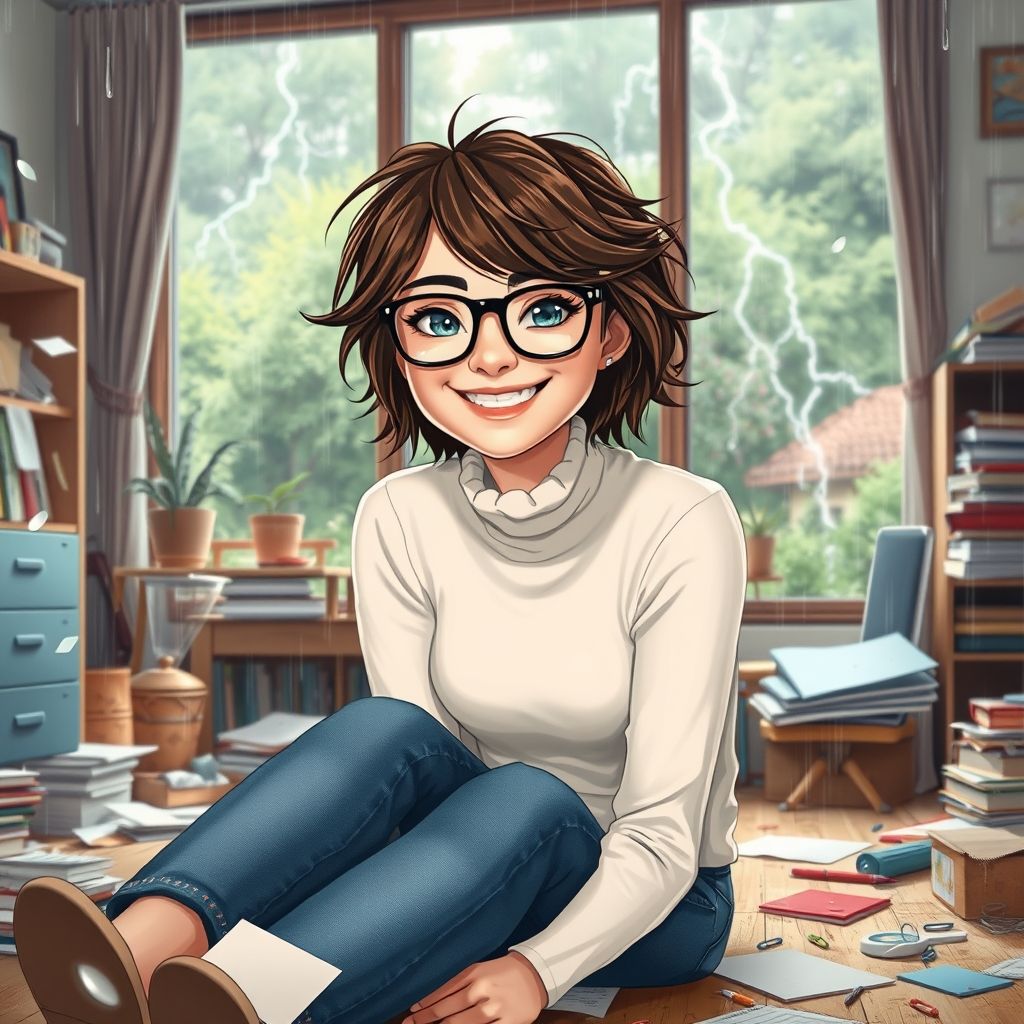
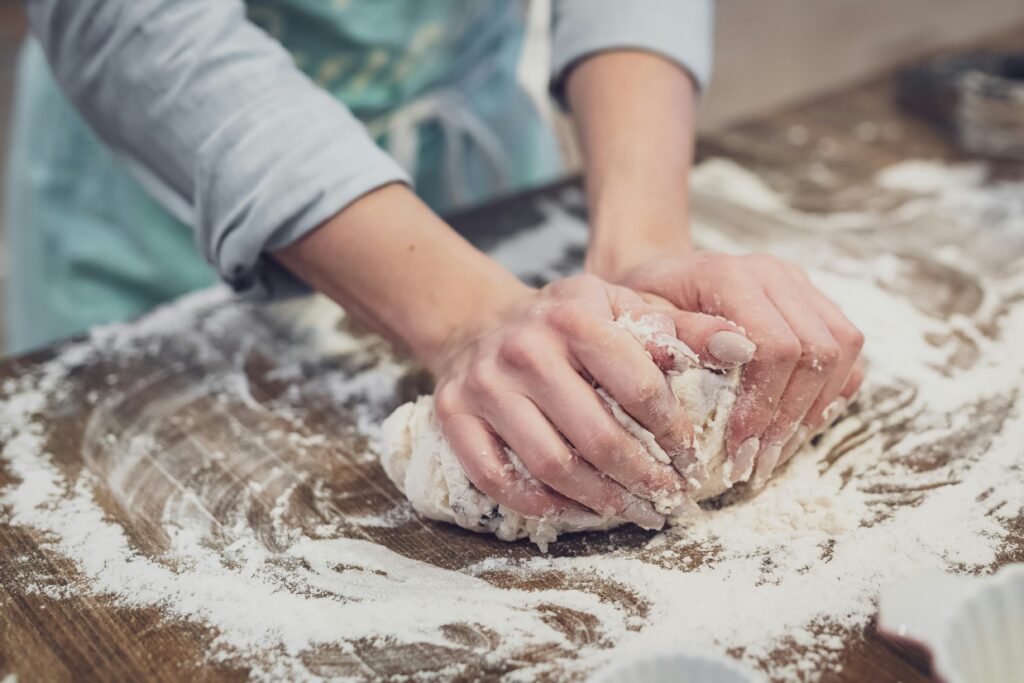
I’ve always been creative, but this was really driven home for me during the COVID-19 pandemic in 2020. In a couple of days the world had totally changed. We were set to shelter in place for what we thought would be 30 days. We had made all the preparations we needed to stay in our 900 square foot condo except for trips to the grocery store and pharmacy. But as news came in, and the number of COVID infections and deaths skyrocketed, I lost my words. I’ve been a writer and editor for decades, and there were no words for the reality of 2020. I didn’t even know how to pray. When I was tempted to crack open a bottle of wine at 10:00 a.m., I decided I might need a better plan to deal with the stress. I had been binge watching The Great British Baking Show. I have been baking since I got an E-Z Bake Oven for Christmas in grade school, so that morning, I left the wine alone and started baking.
During the next year and a half, baking would be my salvation. And it would become my prayer. As I watched my stand mixer knead bread dough, I would take deep breaths and fall into meditation. Forming rolls and icing cakes became prayer. I had always depended on words for prayer and communicating with God. During the pandemic, my definition of prayer expanded to include creative acts.
Looking back I realize that this is not a new insight. Monastics have known this truth for centuries. In the Middle Ages nuns and monks meticulously illuminated manuscripts, their careful brushwork prayer, as much as an artistic endeavor. Monastic bread making has long been considered prayer—feeding the community, both in body and spirit. They understood something fundamental: creation is not just about producing an object, but about entering a state of divine connection.
I had lost my words, but not the urge to make, and I wanted to understand why. I began exploring this creative contemplation practice. St. Hildegard von Bingen in The Divine Works describes God’s ongoing activity in the world as viriditas–God’s greening activity in our world. I am reading J. R. R. Tolkien’s thoughts on sub-creation and sub-creators because God is the only one who creates out of nothing, so God alone holds the title of Creator. I’ve also read the “Letter of His Holiness Pope John Paul II to Artists,” where the Pope (now Saint) John Paull II gives a theological framework for creating works of art as prayer and devotion because we are made in the image of the One who first created the heavens and the earth. In Walking on Water: Reflections of Faith and Art one of my favorite authors, Madeleine L’Engle, reflects on a lifetime of creating from the well of her Christian faith.
Joining the Conversation
My question is the one I’ve been asking for twenty years: what does it mean to be made in the image of God? Genesis gives the first clue: In the beginning God created. In the beginning God created human beings–male and female–in God’s image. As Dorothy Sayers’ points out in The Mind of the Maker the only thing God had done at that point was create. Building on Sayre’s argument I believe to create is to image God. To create connects us to God. To create is to commune with God.
I’m reading The Mind of the Maker for the second time this year. From the beginning Sayers makes it clear that all language about God is analogical. The only language we have to speak about God is metaphor. This metaphorical language extends to the Trinity. Sayers notes that “It may be perilous, as it must be inadequate, to interpret God by analogy with ourselves, but we are compelled to do so; we have no other means of interpreting anything.”1 Our knowledge of God as Creator begins with our own experiences of creativity and procreation, and this is why Sayers thinks analogical language for God is unavoidable. This is why all language is ultimately metaphorical. Remembering, that all of our language for God is analogical and will never convey all that God is, keeps us from veering into idolatry. As with the metaphor God the Father2, we start with what we think is the ideal creator.
Sayers was a writer, so she turns to a writer’s mind to find parallels between God’s creating and ours, taking the ideal writer as her model. Sayers’ creative trinity is The Creative Idea, The Creative Energy, and The Creative Power. The idea is where creativity begins: a recipe, a pattern, an essay, a book, or a poem. The idea is the beginning. The energy is when it starts to take shape. You start writing or finding the right yarn, or the right spices to begin to create what you’re thinking of. This is where you can start to see your idea in what you are creating whether it’s bread, a throw, or a short story. It takes on a life of its own. The power is how your creation affects you and others. What you made is no longer just in your head. It’s out in the world for others to try and hopefully enjoy.
The creative mind trinity parallels the Trinity of the Creeds: The Idea is God the Father. The Energy is God the Word, and the Power is God the Spirit. Working together this trinity of the creative process helps us create just as God created in the beginning with the Spirit hovering over the face of the deep. The Word is Energy made flesh, the Idea made visible.
I recognize this trinity of the creative mind that Sayers has developed. In my own creative endeavors, where I’m writing, baking, knitting, or gardening, I can see how the idea, energy, and power weave their way through my own creations. All of it starts with an idea: an idea about a book, or how I want to lay out the garden, or the kind of cake I want to bake. Then I have to put the work in: it takes a lot of energy to birth our creative ideas into the world. Once my creative object is out in the world then it needs to be tended and other people can see our creative idea and energy for themselves. It’s not as linear as I’ve laid it out. The Creative Idea, the Creative Energy, and the Creative Power work more like a labyrinth; they circle in and out each other. Sayers believed they were inseparable: We cannot see the idea with the energy and power. There is no energy apart from the idea and the power to make it come alive. And there is no power without the idea and energy. In my experience, she is right.
I will be sharing my journey in being a co-creator with God in my life, and how creating draws me closer to God and deepens my prayer life. I’m hoping these writings and musings will become a book. I plan on continuing to work through my own creative journey and what I’m reading to help me understand what it means to be a creator made in God the Creator’s image. I’ve explored these themes a little in Creative Midlife Mayhem: When You Find Chaos: Create and Kneeling with God in the Garden. I explore two different ways of seeing God the Creator found in Genesis 1 & 2.
What about you? What does it mean to you to be made in the image of God? What creative endeavors bring you closer to God? What creative acts feel like prayer?
- Sayers, Dorothy L. The Mind of the Maker (New York: HarperOne, 1987), p. 23. ↩︎
- Although I prefer feminine names, titles, and pronouns for God, I will use the same names and titles for God that Sayers uses in her work. ↩︎
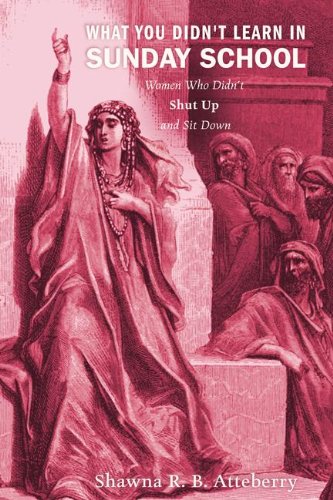
The paperback edition of my first book, What You Didn’t Learn in Sunday School: Women Who Didn’t Sit Down and Shut Up is 50% off until November 30. Go to Wipf and Stock and use the code CONFSHIP when you check out. Media Mail shipping is also free on U. S. domestic orders.