Updated Book Review: Saving Women from the Church

I have upadated my book review after comments Susan left. Please make sure you read her comment. There’s somef good stuff there. Thank you Susan for stopping by!

Today is the release date of Susan McLeod-Harrison’s first book Saving Women from the Church: How Jesus Mends a Divide (Barclay Press, 2008). Upfront I have to say I’m not sure I can review this book objectively. Susan’s story is very close to my own. Reading this book, I wished it had been published about eight years earlier. That is when I was going through my own struggle on whether or not to remain in the Church. And I do mean Church with a big C. I wasn’t thinking of only leaving my denomination, I was thinking of leaving the Church period. I was in seminary and on the ordination track. I did not see a place for myself in Christian ministry. I was single; I was evangelical; and I was called to preach and pastor. I was also asked in various churches if I was going to seminary to be a pastor’s wife. I had come to the point where I wanted to leave. I wanted to walk away. I just did not see a future for myself in the Church.

Saving Women from the Church addresses several of the myths that woman hear in church. Some of the chapter titles are: “If you’ve felt alienated and judged in the church,” “If you believe women are inferior to men,” “If as a single woman, your gifts have been rejected or overlooked,” and “If you’ve been encouraged to deify motherhood.” In the Introduction, she starts with my favorite starting point on women in the church: creation. Both men and women are created in the image of God, and therefore, image God with their gifts and talents God has given them. In each chapter she starts with a fictional account of a woman who is experiencing and living one of the myths. She follows it with a imaginative portrayal of how Jesus treated women in a similar position in the New Testament. She follows the biblical story by explaining what Jesus was doing and with questions for discussion. Each chapter ends with a meditation meant for healing. Saving Women does a great job of translating theology into practical, everyday examples in language normal people use. The history and sociological work she does for each passage, explaining the culture of the people, at the time is also well done.

I think this book would make an excellent woman’s study or small group study. It addresses most of the myths women in the evangelical church have grown up with and still deal with. It would be a great conversation starter, and it is a valuable addition to other books on this subject. The language and tone of the book make it much more accessible and understandable to the typical lay person than most books in this genre. In the conclusion, Susan recommends women in abusive churches leave and gives a list of churches that are egalitarian and open to women in ministry. Saving Women does a good job of acknowledging and describing the myths, and encourages women to get out of these environments. The Recommended Reading at the end of the book also has books that would help in this regard.

Overall I am very pleased that this book is on the market. It starts with the premise that women are made in the image of God and called to build God’s kingdom. Then it deals chapter-by-chapter with the destructive myths that have prevailed in evangelical culture to keep women as second-class citizens and powerless in the pews. It is an excellent resource to begin busting these myths and helping women find their God-given ability to be equal partners in building God’s kingdom with their brothers.

Up to Date

I have answered all comments left in the last week. Thank you for your patience and prayers. I am starting to feel better. I just need to get use to the fact that I have a limited amount of energy, and when it’s gone, it’s gone. And I need to continue to use the energy I do have wisely. I have set a goal to post twice a week, so I plan to be posting on a regular basis and answering comments in a more timely fashion.

Shawna

Updates

I’m sorry I have not responded to comments in a timely fashion. I have not been feeling well. I saw my primary care doctor on Friday. I am awaiting blood tests. She has referred to me a surgeon for the lump under my right armpit. Since it’s been there for a month and hasn’t changed, it probably needs to come out. So that’s where we’re at right now.

On the writing front, my article “A women’s place is where?” will be coming out in the Spring issue of Mutuality. I have also received another assignment from Credo. Yeah! I am continuing to work on the book proposal for Career Women of the Bible. I have set March 14 for the deadline. I also need to get started on Sunday’s sermon.

Please continue to pray for me. I do not have a lot of energy right now, and I need to use it wisely.  Thank you.

Shawna

Poetry: The Power of Words, Women, and New Life

“Full Figured Beauty”


I see beauty
In full curves,
Wide hips,
Full abdomens.
Givers of life
Are rounded and full.
They have room
To conceive,
To nourish,
To protect.
They give birth
To children.
They give birth
To dreams.
They give birth
To new realities.
Lascivious curves,
Full breasts,
Rounded abdomens
Have room
To conceive,
To nurture,
And to birth:
New Life.

“Words”


More than letters
On a page
More than the
Dictionary says
Words
Order life
Rearrange life
Create life
Words
Bring new worlds
Into being
And birth new
Universes to explore


“Amaryllis”


All appears cold and dead
But through the icy ground,
Through the snow,
A green stem pushes
Its way to the light.
In the frigid sun
It unfurls its
Fiery crimson flower.
All may appear
Frozen and dead,
But appearances
Deceive. As new life
Breaks through frozen soil.


“Candlelight on the Wall”


Candle flickers in the night;
Twisting and dancing
In the shadows.
Wavering, waving,
Tenacious, it keeps aflame.
providing light in the dark,
And a window into the soul

(c)2008 by Shawna R. B. Atteberry

February 17: A Visit in the Night

A Visit in the Night

John 3:1-17


The night is good for all sorts of things: staying up until three in the morning reading a good book, writing, or watching infomercials. For students the wee hours are normally filled with finishing up required reading, writing papers and preparing presentations for the class in a few hours. Unfortunately the night is also the time when our worries, doubts, and fears can take on monster size proportions and keep us tossing and turning into the wee hours. Normally that’s when watching infomercials begin. But one particular night a man decided to seek out Jesus.


Nicodemus had heard about Jesus and may have even seen some of his miracles and heard Jesus’ teachings himself. Nicodemus wanted to know more about this itinerant rabbi who disrupted the buying and selling at the temple and was turning the religion that he knew on its ear. Nicodemus came at night. One reason was probably that he didn’t want his colleagues to know. Nicodemus was a Pharisee, a teacher of the Law, and one of the religious leaders of the people. The last thing he should be doing was going to an itinerant no-name rabbi from Galilee. But Nicodemus was also up. Scribes, Pharisees, and teachers of the Law normally studied the Torah at night in preparation for the teaching and debates of the next day. So it was also convenient for Nicodemus to come to Jesus at night. All his duties of the day were over, and he was left on his own to study the Torah into the wee hours. We’ll probably never know exactly why Nicodemus came at night, but it was probably a combination of those two things.


So Nicodemus has come to Jesus and he says that he and other people know that Jesus is a teacher from God. He knows the miracles of Jesus cannot be done apart from God’s presence. Then Jesus throws him for a loop. Jesus starts talking about being born from above to enter the kingdom of God. As far as Nicodemus is concerned, he is part of the kingdom of God. He is a Jew, descended from Abraham. He was born into God’s covenant people. Why would he need to be reborn to enter the kingdom of God? How could he be reborn?


But Jesus did not tell Nicodemus that he had to be reborn. He didn’t need another physical birth. Jesus said he needed to be born from above, by the Spirit. Born of God. John opened his gospel saying, “But to all who received him, who believed in his name, he gave power to become children of God, who were born, not of blood or of the will of the flesh or of the will of man, but of God.” Nicodemus had been born a Jew by the blood, but that no did not guarantee that he would see the kingdom of God. Nicodemus needed to acknowledge that Jesus was more than just a teacher sent by God. He needed to see and believe that Jesus is God’s Son. He needed to be born of the Spirit. Like the wind blows and no one knows where it is from or where it is going, so it is with the Holy Spirit. The Spirit works as she will birthing and giving new life to those who believe, not only Jesus’ miracles, but that Jesus is the Son of God sent by God to save the world. In fact, according to John believing the miracles is not enough–there must also be faith in the One that God sent.


The last we hear of Nicodemus in this passage is his question: “How can this be?” Although Jesus chides him for not understanding, he goes on to further explain to Nicodemus that he has been sent by God into the world. He has descended from heaven, and if Nicodemus will believe this, he will have eternal life. In John, eternal life is not something that begins after death: it begins when we believe that Jesus is God’s Son, and it is through his crucifixion and resurrection that we come into God’s kingdom. Even this early in his ministry, Jesus talks of his death on the cross. Eternal life is not always an easy road. Jesus also lets Nicodemus know that he is not being condemned. God did not send him to condemn the world but to save it. God sent Christ because of God’s love for the world, for those made in God’s image. God’s love has compelled the Incarnation, and it is God’s love that Jesus lives out.


We don’t know what Nicodemus’ decision was. John never tells us. Nicodemus’ last spoken words are “How can this be?” But it is not the last we see of him in John. He appears twice more. In John 7:50 he defends Jesus to the Sanhedrin and asks them to hear him out. We last see him at the foot of the cross in John 19 when he and Joseph of Arimathea took Jesus’ body from the cross and prepared it for burial. Nicodemus might have asked questions and had doubts, but he was not given up on. He appears at the beginning of John’s gospel and hears one of Jesus’ first prophecies of his death and resurrection. At the end of the Gospel he at the cross and tomb. Did he become a disciple? Only God knows. The same God who loved him enough to take the time to explain being born from above and eternal life to him.


It doesn’t matter why or when Nicodemus came to Jesus. What matters is that he came. He came to Jesus and listened to Jesus. He may not have understood at first, and he asked questions, but Jesus answered his questions and explained what was necessary for Nicodemus to become part of the kingdom of God and have eternal life. It is the same for us. It doesn’t matter why we come to Jesus or when. The important thing is that we have come and continue to come. We can have our doubts and ask questions just as Nicodemus did. Jesus still gives answers and elaborates. We can even come to Jesus for the wrong reasons: because we want signs or an easier life, money, or health. Jesus will correct us just as he did Nicodemus.


Jesus will not give up on us just as he did not give up on Nicodemus. Although Nicodemus did not seem to get what Jesus was telling him in this chapter, he stands at the cross in chapter 19 and helps lay Jesus to rest. He heard Jesus’ prediction of being raised up for salvation and eternal life. He saw how far God would go to show God’s love for all humanity. He saw first hand God’s great love for the world. In the same way God continues to show us God’s love. Jesus continues to point to the cross and say this is how much God loves you. This is how much I love you. We are never given up on.


Jesus continues to beckon us to come and believe. Not to believe that he will make our lives peachy and nothing bad will ever happen to us again. But to believe that he is the Son of God, the one God sent into the world, so that we can have a relationship with God. We can have eternal life as God’s sons and daughters in God’s kingdom. People will always want signs and miracles and sometimes we do too. And sometimes we get them. But they can never be the basis of our belief. The foundation of our belief must be the Incarnation: that God has become flesh and lived among us. I love how Eugene Peterson translates John 1:14 in The Message: “The Word became flesh and blood, and moved into the neighborhood.” God became fully human and moved into our neighborhood. This is the foundation of our faith. The miracles and signs are nice when they come, but we must remember the one sign Jesus gave to believe in him. In John 2 he tells those who ask him what authority he has to disrupt buying and selling in the temple that “destroy this temple, and in three days it will be raised up again.” He was speaking of his death and resurrection. In Matthew, Mark, and Luke, he says the only sign given will be the sign of Jonah. Just as Jonah was in the belly of the big fish for three days and nights, so the Son of Man will be in the heart of the earth. The only sign our faith rests upon is the death and resurrection of Christ. The Incarnation and Resurrection are the signs our faith rests upon–not the miracles of healing, exorcism, or food.


But when we get hung up on those miracles Jesus does not give up on us, just as he did not give up Nicodemus. Remember Nicodemus first came because of the signs and miracles Jesus was doing. That’s how he knew Jesus was sent from God. That’s where Jesus started and lead him to see that wasn’t enough. Nicodemus had to see that Jesus was God. Just as we need to see that Jesus is God.


Although Jesus is a little hard on Nicodemus, he tells Nicodemus God’s motive for sending the Son and for the toughness that tries to change his focus from Jesus being a teacher to Jesus being the Messiah: God’s love. This is what we need to remember too as Jesus continually turns our gaze away from lesser things to remind us of what is really important. Jesus continues to redirect our focus because of God’s love. It is God’s love that compels us to change and become more Christlike. Just as it was God’s love that led us to confess Jesus as our Savior in the first place. Although condemnation and “hellfire and brimstone” are popular ways for some in Christianity to try to get people to come to Jesus, that is not what God did. In fact, John 3:17 makes it very clear that Jesus did not come to condemn anyone in the world, but to show the love God had for the world and give us a way into eternal life with God.


As we walk through Lent, examining our lives, and repenting of the places we have not given to God or walked away from God, we need to remember why God is leading us through this time: because God loves us. God wants to have a more intimate relationship with us. God want us to be more Christlike. God wants us to live in the abundant life and eternal life that we can have in Christ. Walking through Lent can be long and dark, but the God who loves us walks with us, telling us what we need to do, just as Jesus told Nicodemus what he needed to do to have eternal life with God. God’s discipline and judgments are always to lead us deeper into eternal life and closer to God.

The picture is from the St. John’s Bible.
Health Update and Book Meme

I went to my OB-GYN and had an ultrasound done this week. It looks like the lump I found is an enlarged lymph gland. It has nothing to do with my breast; it is under the pectoral muscle. I have made an appointment with my primary care doctor to see what she thinks we should do. I see her Feb. 22. Thank you for all you prayers, comments, and emails.

Julie tagged me to do this book meme:

Pick up the nearest book of 123 pages or more. No cheating!
Find Page 123.
Find the first 5 sentences.
Post the next 3 sentences.
Tag 5 people.

The book nearest me did not have 123 pages: Carol Meyers’ Households And Holiness: The Religious Culture Of Israelite Women (Facets). But the book under it does: Phyllis Bird’s Missing Persons and Mistaken Identities (Overtures to Biblical Theology) (I’m doing sociological research for Career Women of the Bible). I had to go to page 124 because 123 only has two sentences. It’s a title page with a lot of footnotes.

A legacy of the long and intense theological interest in the imago Dei has been an atominzing and reductionist approach to the passage, in which the attention is focused on a single phrase or clause, severing it from its immediate context and from its context within the larger composition, a fixation and fragmentation which has affected exegetical as well as dogmatic discussion. A further legacy of this history of speculation has been the establishment of a tradition of theological inquiry and argument with a corresponding body of knoweldge and norms separate from, and largely independent of, exegetical scholarship on the same passage. The rise of a biblical science distinct from dogmatic theology resulted in a dual history of scholarship on the passage with little significant dialogue between the respective specialists.

Now you know why it’s been awhile since you saw any original posts from me. Between this and sermons, I haven’t had much time. The other books I’m reading right now are Carol Meyers Discovering Eve: Ancient Israelite Women in Context and Carolyn Osiex and Maragret MacDonald’s A Woman’s Place: House Churches In Earliest Christianity. If you want to do the meme consider yourself tagged.

Lenten Discipline: Fasting

Fasting from food is the normal fasting practice during Lent. Although now people fast from many things: a particular food group, sweets, TV, or the internet. On Street Prophets Starwoman posted a great post on fasting last year. Fortunately she linked to it in yesterday’s coffee hour for those of us who missed it the first time or just forgot about it. Here is an excerpt:

Fasting and Gratitude

This is a simple application of the old saying Absence makes the heart grow fonder. Fasting can sharpen our appreciation of what we do have, what we may otherwise take for granted.

Americans have a lack of appreciation for the things we have; we waste so much that what we discard in one day could feed all of Africa.
– Brother V., Franciscan missionary to Africa for 17 years

Physical hunger, Spiritual hunger

For me, this is the most compelling reason to fast. Hunger is frequently used metaphorically in the Jewish and Christian scriptures, and I suspect in other scriptures as well. We hunger for God, we hunger for justice, we hunger and thirst for mercy, we thirst for God as a deer thirsts for running streams.

Let your body teach you what it means to hunger.

What do you hunger for?
Who or what is the Divine for which you hunger?
What do you hunger to see in the world?

She also has tips for those of us that have trouble fasting because of low blood sugar levels. I stopped fasting because of low blood sugar and what it did to me after 3:00. With her advice, I think I am going to fast until after the Ash Wednesday service (8:00 p.m.). And if it goes well fast on Fridays this Lent. Thank you Starwoman.

Lenten Thoughts and Practices

I found two artlices on Lent that I really enjoyed. The first one describes why Christians need to observe Lent, and the second one offers a Lenten discipline.

In Images of Lent, Ron Rolheiser says:

Religiously the richest image we have for lent is the image of the desert, of Jesus going into there voluntarily to fast and pray. Scripture tells us that Jesus went into the desert for forty days and, while there, he ate nothing. This doesn’t necessarily mean that, literally, he took no food or water during that time, but rather that he deprived himself of all physical supports (including food, water, enjoyments, distractions) that protected him from feeling, full force, his vulnerability, dependence, and need to surrender in deeper trust to God. And in doing this, we are told, he found himself hungry and consequently vulnerable to temptations from the devil – but also, by that same token, more open to God.

Scot McKnight at Jesus Creed challenges his readers to practice this discipline through Lent:

I am asking my blog’s readers to consider a challenge for Lent. No, it is not giving up anything. Instead, it helps move Lent into 40 days of living out the gospel: I am asking you to begin and end each day of Lent (beginning Wednesday) by reciting the Jesus Creed. And, whenever it comes to mind throughout the day, I am asking you to recite it again. In your evening recitation of the Jesus Creed, we are asking you to give some moments of recollection to confess any sins against the Jesus Creed throughout the day. |inline

Prayer Update

I went to the doctor for the lump I found below my armpit, and she said that it was probably a swollen or blocked lymph node. Cancer normally does not develop where the lump is. I have an ultrasound appointment tomorrow. I didn’t think I would get in that soon, but when I called for the appointment this morning, the woman I talked to had just taken a cancellation, and she slipped me in. Thank you for your prayers.

Just When You Think…

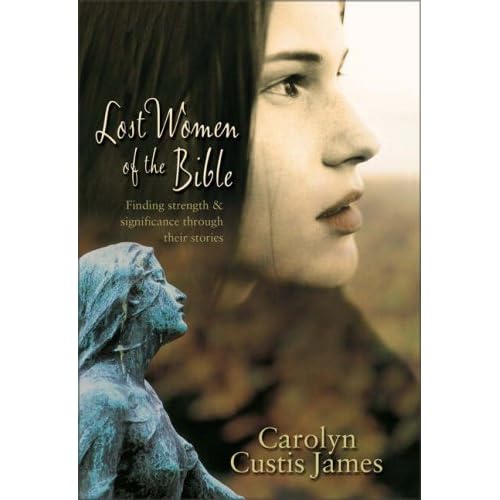
Just when you think there are ten people reading your blog, including family, you find out differently. Last week I mentioned in a post how disappointed I was in the last chapter of Carolyn Custis James’ Lost Women of the Bible. Today I received an email from Carolyn:

I deeply appreciate your comments about my book, Lost Women of the Bible. I take feedback seriously and am always interested in finding ways to improve and communicate more effectively. I must confess, however, to feeling saddened by your disappointment in the final chapter on Paul and the Women of Philippi, particularly because your disappointment was tied to something my book (and that chapter in particular) never intended to address.

In the chapter in question, I am addressing an aspect of the problem women face in the church that impacts every Christian woman, and not simply the women who feel called to pastoral ministry. My goal is to establish the fact that men (even men who are senior pastors) need women in the battle with them—ministering at their side and also ministering to them personally. That is why I’m talking about male pastors. So the logic goes, if these men need us, then surely every man needs the spiritual ministries of women. I doubt female pastors would have any difficulty in valuing the ministry of other women with and to themselves, so I wasn’t addressing them.

My books address a general audience. I purposely do not address specifics about what women can or can’t do in the church. I intentionally do not take a public position on the ordination question. I leave that discussion to others. I know this frustrates many readers. My purpose is to get both sides to look at the deeper issue of why the spiritual gifts and contributions of women are not just permissible, but essential to the whole body of Christ. I hope my books cause church leadership to wrestle with how that looks in their particular setting. It won’t look the same in every church, but every church needs to think this through and hopefully, begin to make progress in how men and women serve God together.

I think it is very cool that Carolyn, not only keeps track about what is being said about her books, but takes the time to email to correct reader mispercecptions. This was my response:

Thank you for writing me about Lost Women in the Bible. Thank you for clarifying what your purpose was for the book. I will re-read the last chapter with what you’ve said in mind. I really did like the book, and the scholarship you did was excellent (I’m a geek and a sucker for really good scholarship). You are also a great storyteller. I’m studying both Lost Women and When Life and Beliefs Collide because I am still trying to figure out how to keep a conversational tone throughout my writing instead of vacillating between conversational and academic.

I do think you are filling a huge gap for women with this book. When it comes to books about women in ministry it seems women are caught between women’s and children’s ministries or going for ordination. It’s good to see a book for women that does holistically address women’s spiritual gifts and both women and men working side by side to build God’s kingdom. I am glad that how I read the last chapter was not what you intended. More than likely I was reading through my own experience and what I thought should be there instead of staying with what you stated in the introduction was your intention with the book.

Thank you so much for taking the time to email me. It means a lot that you keep an eye out on what is being said about your books and taking the time to respond.

I am going to re-read the last chapter, and I have a feeling that my response is going to be different. I also have a feeling that the book review is going to be different as well.