Life in the City, Life in the Spirit Housekeeping

Hey all. I’m sorry there haven’t been any new posts lately, but I’ve been housecleaning. I’ve cleaning up the gobbly-gook that embedded itself in several past posts the last time we upgraded WordPress. On Career Women of the Bible all the articles through The Samaritan Woman have been cleaned up. Reading them will be easier. I plan on having the rest done by the end of the week.

I hope everyone is doing well. Spring has finally come to Chicago, and I’m enjoying it. Last week I actually went outside without a coat or jacket on! Whoo-hoo!

New Benedictine Community

Sophia and I have been talking about starting a long distance Benedictine community for those of us who would like to follow the Rule of Benedict, but not close enough to a community (or a community we would fit in). She summed it up very well in her post, so I’m copying it here:

Calling all lovers–or potential lovers–of Benedict’s Rule!

After a lengthy and fruitless search for a lay Benedictine community to join, or a monastic house with which to affiliate as an oblate, I was finally inspired to consider seeking out a small group with which to explore the creation of a new, emergent style, community.

I am envisioning something long distance, coed, and very flexible about individual interpretations of Christian faith, Benedictine spirituality, and the OSB promises of stability, obedience, and conversion of life. Some sort of commitment to praying the daily office, in the version most appropriate for each individual, and to study of Benedictine spirituality and its application in our daily lives would likely be a part of our common practice.

We would support each other in mutual prayer and through an e-group for spiritual sharing and prayer requests. Perhaps we would eventually have a yearly in person gathering (with local gatherings more frequently, if we are lucky enough to get folks close enough to do that).

If anyone is interested in exploring this possibility please shout out in comments or email me at the address in the sidebar.

If you’re interesed let one of us know. Leave a comment on one of our blogs or email us. My email is shawna (at) shawnaatteberry (dot) com.

What Jesus Had to Say About Families

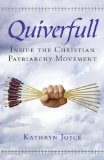
In Biblical Women Who Didn’t Submit: Abigail, I began looking at The Quiverfull Movement and some of the beliefs that far right, fundamentalist Christian groups have about women. The Quiverfull Movement has been in the press due to Kathryn Joyce’s new Quiverfull: Inside the Christian Patriarchal Movement. Since my first post, The American Prospect and GlobalComment have either done a review or an interview with Kathryn, and Religion Dispatches has posted a searing commentary on their view of children as taking culture back for God in God’s Little Soldiers: Procreation as a Weapon.

For the past week or so I’ve been having stray thoughts about what Jesus had to say about families wandering through my head. I wonder what people like the Quiverfull movement and others that idolatrize the nuclear family do with Jesus’ view of the biological family:

Do not think that I have come to bring peace to the earth; I have not come to bring peace, but a sword. For I have come to set a man against his father, and a daughter against her mother, and a daughter-in-law against her mother-in-law; and one’s foes will be members of one’s own household. Whoever loves father or mother more than me is not worthy of me; and whoever loves son or daughter more than me is not worthy of me (Matthew 10:34-37).

But to the one who had told him this, Jesus replied, “Who is my mother, and who are my brothers?” And pointing to his disciples, he said, “Here are my mother and my brothers! For whoever does the will of my Father in heaven is my brother and sister and mother” (Matthew 12:48-50).

To another he said, “Follow me.” But he said, “Lord, first let me go and bury my father.” But Jesus said to him, “Let the dead bury their own dead; but as for you, go and proclaim the kingdom of God” (Luke 9:59-60).

Whoever comes to me and does not hate father and mother, wife and children, brothers and sisters, yes, and even life itself, cannot be my disciple (Luke 14:26).

Jesus redefined family as those who do the will of God, even at the cost of the biological family. One’s family was no reason not to follow Jesus. If one’s family got in the way of following Jesus and doing the will of God, then the family was to be left behind. It is absolutely amazing how quickly biblical literalists say, “Oh but that’s not what Jesus really meant” when these verses come up (Everyone picks and chooses what to take literally in the Bible, whether they admit to it or not). If you think this is a radical and hard thing to swallow now, imagine what it would have been like to hear in the ancient world.

The paterfamilias was the social unit. And the paterfamilias is not the equivalent of today’s nuclear family with mommy, daddy, and kiddos. The paterfamilias was the patriarch, his wife or wives, all their children, and anyone who belonged to the household: parents, siblings, servants, and slaves. The patriarch could be your grandfather, father, uncle, or older brother, depending on who was still alive. A person did not exist outside of the paterfamilias in society in that day. You were defined by the family, and your social standing was also determined by your family and the family’s connections. When Jesus’ followers heard him say: “Whoever comes to me and does not hate father and mother, wife and children, brothers and sisters, yes, and even life itself, cannot be my disciple,” they must have been picking themselves up off the ground. Outside of a woman leaving her family for her husband’s family, leaving the paterfamilias was absolutely unheard of. If you did, you were on your own, which meant, more than likely you would end up a social outcast. But the fact remains that Jesus said this.

He redefined family outside of biological relationships. When you became a Christian, your family became the Church. Your nuclear family came after that. Not that Jesus absolutely did away with the biological family either. His first miracle was at a wedding (probably a family wedding) at the request of his mother. He made sure his mother was taken care of before he died. But Jesus made it very clear that the most basic societal structure was not the family: it was his followers, the Church. The Church, those who obeyed the will of God, would be the basic social unit that changed the world. The Church would be the one to proclaim the gospel and show people how to live like Jesus in the world. Granted we haven’t always done a good job of it, but that is how Jesus redefined family.

If you’re a Christian, the biological family cannot be the foundation of society, and all evils do not come from the family breaking up. In fact, there have been times in Christian history where marriage and children were looked down on as second best, and both fathers and mothers abandoned their children to join monasteries for the higher good of chastity and prayer (but that’s another post).

Jesus and the New Testament writers make it clear that the family of God, the Church, is the foundation of society. It is also interesting to note that not many of the New Testament leaders are married or have children, or that children just aren’t mentioned. A good example is Priscilla and Aquila: they’re married, they make tents, they host churches in the homes, but do they have kids? We don’t know. Neither Jesus or Paul married and had children. Peter’s wife is mentioned, but did they have kids? Don’t know. The Bible doesn’t say whether Phoebe or Lydia, Timothy or Titus, were married or had children.

Yes, families are important. Yes, we should marry if we are called to do so and have children if called to do so. We should also remember there are people who aren’t called to marriage or parenthood. We just need to remember that it is not the nuclear family that changes the world. It is the Church’s testimony of Christ and living out the love of Jesus in our daily lives that brings the kingdom of God to earth. That should begin in our families, but it should not end there.

Why I joined The Episcopal Church

I should get back to regular blogging later this week. Holy Week was very busy, and I am getting back into my normal routine. Since I haven’t written much, I am going to give a little more link love to The Daily Episcopalian. In A Comprehensive Solution, Sam Candler nails why I decided to be confirmed into The Episcopal Church last year. Here’s a taste:

At its best, the Anglican tradition of Christianity resolves conflict gracefully. And it does so, rarely by taking “the middle way,” which has long been another name for the Episcopal Church (the “middle way” between Catholicism and Protestantism). I believe the Anglican tradition of Christianity often finds truth on both sides of theological and cultural disputes. The Anglican Communion of Churches finds “the comprehensive way,” affirming truth on both the traditional and the progressive wings of Christian community. The Anglican Communion of Churches might better be called the “via comprehensiva,” the comprehensive way.

I believe this “comprehensive way” was responsible for resolving other conflicts in Episcopal Church history, too. It explains how the early Protestant Church in the United States of America could be related to the Church of England but also separate from it. It was the comprehensive way that held the Episcopal Church together during the tragedy of the American Civil War. The comprehensive character of Anglicanism and the Episcopal Church also enabled us to meet the rise of science and higher literary criticism in the nineteenth century with grace and faith. We found a way to read the Bible with both faith and reason.

The Christian Church inevitably involves conflict. Usually, there are persons of good Christian faith on both sides of the conflict. The particular Anglican tradition of Christianity is a way of dealing with conflict gracefully. Obviously, our history has not always been clearly graceful. Nor is it always graceful right now. But the tradition which guides us is truly a graceful one.

From generation to generation, the Episcopal Church seeks to honor the universal claim of the Christian gospel while also honoring local authority and indigenous faith. That is another inherent challenge – and conflict—in all churches. How can we be obedient to both global and local authority? How can we honor both the gospel and our local culture? It is a journey and task entrusted to us by our Lord Jesus Christ himself.

Make sure you read the rest of the article. It has a great history of the beginning of The Church of England that’s worth the trip.

"Every five hundred years, the church feels compelled to have a giant rummage sale"

Religion Dispatches has a great article up: Reports of the Death of the Episcopal Church Are Greatly Exagerrated:

When I interviewed author Phyllis Tickle, she placed this current crisis into a much-needed historical perspective.

As Bishop Mark Dyer has observed, about every five hundred years, the church feels compelled to have a giant rummage sale. During the last such upheaval the Great Reformation of five hundred years ago, Protestantism took over hegemony. But Roman Catholicism did not die. It just had to drop back and reconfigure. Each time a rummage sale has happened, in other words, whatever held pride of place simply gets broken apart into smaller pieces, and then it picks itself up and to use Diana Butler Bass’s term, “re-traditions.”

Such historical nuances are notably absent in the current coverage of this Anglican “crisis.” Granted Henry VIII’s Tudor tirades presented a rather dubious background to the founding of the Anglican Communion—not to mention Bloody Mary’s BBQ of Archbishop Cranmer and Bishops Latimer and Ridley, as well as the role the Anglican Church played in the global colonization of the British Empire. When Christianity Today reported that for the past ten years, the Anglican Communion had been embattled due to controversies over sex, power, theology, and money, they were only off by about five hundred years.

Moving back to the other side of the pond, we must remember that the crises arising in US Episcopal circles following the Revolutionary and Civil Wars presented far greater hurdles than this current bible battle. This is hardly the “biggest” split and challenge for Anglicans, as reported by The Washington Post and The New York Times respectively. Moreover, when The Wall Street Journal terms this debate a “schism,” it brings to mind a Christian catastrophe like the Great Schism of 1064, that separated Roman Catholics from their Eastern Orthodox brethren. In comparison, a group of 100,000 Anglicans defecting from the 80 million member Anglican Communion resembled a case of the spiritual sniffles.

Furthermore, those who choose to interpret Anglicanism through contemporary evangelical eyes fail to see the full polity picture. Historically, while Anglicans do not reach a universal consensus on a number of social and political issues, they come together through their common worship as found in The Book of Common Prayer. Having found unity in communion, they return to the pews to continue their disagreements.

Read the whole article. Becky Garrison gives a great overview of what is going on in the Anglican Communion.

Holy Week Happenings at Chicago Grace Episcopal Church

If you’re in the South Loop area and need a place to celebrate the events of Holy Week, consider yourself invited to Grace Episcopal Church at 637 S. Dearborn St (Bus lines 22 and 62 Polk/Dearborn, Red Line Harrison/Polk exit, LaSalle Blue Line, LaSalle Metra Station).

Wednesday, April 8

Sandwich, Scriptures, and Sacrament, 12:15 p.m. Every week we bring a lunch and discuss a Scripture passage from the liturgy on Sunday. We will be discussing one of the Easter passages this week.

Our church helps out The Night Ministry. The Night Ministry ministers to the homeless at Humboldt Park through medical care, food and other necessities. At 5:00 p.m. will be making sandwiches and bag lunches for Thursday night. At 6:00 p.m. there is a centering prayer practice.

Thursday, April 9

Our Maundy Thursday service will be held at Humboldt Park (California and Division). If you would like to help hand out the lunches, we will be meeting at the church at 5:45 p.m. We will load up the van then head out. After we feed everyone, we will begin the liturgy for Maundy Thursday with whomever would like to join us. The liturgy will begin at 7:30 p.m. Our minister of music, Wayne Maas, will be leading the service. After we return to the church, we will strip the sanctuary for the observance of Good Friday.

Friday, April 10

There will be two liturgies on Good Friday: 12:15 p.m. and 6:30 p.m. Our seminary intern, Elizabeth Molitors, will be preaching at both services and leading us through a modern version of the Stations of the Cross. A special offering will be taken up for The Episcopal Church in Jerusalem and the Middle East.

Saturday, April 11

We will be going to St. James Cathedral (Red Line Grand exit) at Wabash and Huron to observe the Great Vigil, 8:00 p.m.

Sunday, April 12

There will be two Feasts of the Resurrection, 8:00 a.m. and 10:00 a.m. Our parish priest, Rev. Ted Curtis will be presiding.  After the 10:00 a.m. service, we will be enjoying an Eastern luncheon. There will be a special offering taken up for the Night Ministry on Easter and the following Sunday.

Biblical Women Who Didn't Submit: Abigail

Conservative and fundamentalist Christians of the extreme kind are getting some press right now. It’s due to Kathryn Joyce’s new book Quiverfull: Inside the Christian Patriarchy Movement. Articles by Kathryn or reviews of her book have appeared on NPR, Mother Jones, Salon, Religion Dispatches, Feministing, Feminste, Pandagon, and Emerging Women. Members of the Quiverfull movement are biblical literalists who believe families should have as many children as God gives to them. (The name quiverfull comes from Psalm 127:3-5: “Sons are indeed a heritage from the Lord, the fruit of the womb a reward. Like arrows in the hand of a warrior are the sons of one’s youth. Happy is the man who has his quiver full of them.”) They do not use artificial birth control, and have families as large as 20. They homeschool their children. There are strict gender roles: men work and the public square is their place. Women are to be homemakers and  mothers. Their sphere is to be in the home. And of course, wives are to be totally submissive to their husbands. The husbands are the high priests and heads of their homes. Their wives must always defer to them. In the May/April issue of Mother Jones, Kathryn Joyce’s “The Purpose-Driven Wife” discusses another fundamentalist group (not part of the Quiverfull Movement) that gives the classic complementarian view of a submissive wife and mother:

[The wife’s] priorities may include rising early to feed the family, being available anytime to satisfy a husband’s desires (barring a few “ungodly” or “homosexual” acts), seeking his approval regarding work, appearance, and leisure, and accepting that he has the “burden” of final say in arguments. After a wife has respectfully appealed her spouse’s decision-a privilege she should not abuse-she must accept his final answer as “God’s will for her at that time,” Peace advises. The godly wife must also suppress selfish desires (for romance, a career, an equitable marriage), practice addressing her spouse in soothing tones, and maintain a private log of bitter thoughts to guide her repentance. “If you disobey your husband,” Peace admonishes in The Excellent Wife, “you are indirectly shaking your fist at God.”

According to them the Bible says so. Actually the Bible says so in three verses out of the entire canon. Twice in Paul’s letters and once in 1 Peter we read that wives are to submit to their husbands. But we see a different picture when we read about the women in the Bible. They did not submit in all things to their husbands. In fact some of them defied their husbands and did what was best for their families and households. It was a very good thing that Abigail did not submit in all things to her husband, Nabal. If she had she would have been slaughtered. Her story is found 1 Samuel 25.

A Decisive Woman

Abigail’s husband was Nabal. Immediately we know the man is going to do something stupid: Nabal means fool. And Nabal does not disappoint us. David has not been crowned king yet. At this time he is on the run from Israel’s king Saul. David and his band of mercenaries protect shepherds from wild animals and bandits. In return, when the landowner sheered the sheep and feasted at the end of the season, he would feed and give gifts of food to David and his men. Nabal, not only decides he’s not going to pay up, he adds insult upon insult about David. David has 400 warriors, and he is angry. He decides that he is going to kill Nabal and his household.

One of Nabal’s slaves who heard what Nabal said to David’s messenger goes to Abigail. He tells her what happened. Now if Abigail would have been the submissive wife that Martha Peace thinks all women should be, Abigail would have submitted to her husband’s idiocy, been resigned to her fate, made her peace with God and waited for David and his men to wipe out her household. But Abigail did not submit: she made a decision and acted quickly.

Then Abigail hurried and took two hundred loaves, two skins of wine, five sheep ready dressed, five measures of parched grain, one hundred clusters of raisins, and two hundred cakes of figs. She loaded them on donkeys and said to her young men, “Go on ahead of me; I am coming after you.” But she did not tell her husband Nabal. As she rode on the donkey and came down under cover of the mountain, David and his men came down toward her; and she met them (1 Samuel 25:18-20).

The next two verses tell us: “David had said, ‘Surely it was in vain that I protected all that this fellow has in the wilderness, so that nothing was missed of all that belonged to him; but he has returned me evil for good. God do so to David and more also, if by morning I leave so much as one male of all who belong to him.'” The English translation waters down David’s actual vow: “God do so to David and more also, if by morning I leave so much as one male who can piss against a wall to him” (Reading the Women of the Bible: A New Interpretation of Their Stories by Tikva Frymer-Kensky, 317-18).*  In very vulgar language we see David’s rage as he vows to wipe out Nabal’s entire household.

A Wise and Strong Woman

Abigail meets David on his way to fulfill his oath. The first thing she does is get down from her donkey and fall on her face before David. Now we find out what kind of woman Abigail is: she is a wise woman. She embodies Lady Wisdom from Proverbs 1–8.

‘Upon me alone, my lord, be the guilt; please let your servant speak in your ears, and hear the words of your servant. My lord, do not take seriously this ill-natured fellow Nabal; for as his name is, so is he; Nabal* is his name, and folly is with him; but I, your servant, did not see the young men of my lord, whom you sent.

Now then, my lord, as the Lord lives, and as you yourself live, since the Lord has restrained you from blood-guilt and from taking vengeance with your own hand, now let your enemies and those who seek to do evil to my lord be like Nabal. And now let this present that your servant has brought to my lord be given to the young men who follow my lord. Please forgive the trespass of your servant; for the Lord will certainly make my lord a sure house, because my lord is fighting the battles of the Lord; and evil shall not be found in you as long as you live. If anyone should rise up to pursue you and to seek your life, the life of my lord shall be bound in the bundle of the living under the care of the Lord your God; but the lives of your enemies he shall sling out as from the hollow of a sling. When the Lord has done to my lord according to all the good that he has spoken concerning you, and has appointed you prince over Israel, my lord shall have no cause of grief, or pangs of conscience, for having shed blood without cause or for having saved himself. And when the Lord has dealt well with my lord, then remember your servant (1 Samuel 25:24-31).

Abigail first offers to take David’s oath and God’s judgment on herself. Oaths were taken very seriously, and David had said that God’s wrath could come down on him if he didn’t kill every man in Nabal’s household. In order for David to save face in front of his men, Abigail took God’s wrath on her own head. She is willing for the curse to fall on her if David will hear her out.

She goes on to tell David not to mind her husband: he is named “Fool,” and he is a fool. Abigail had not known of the servants he sent or their request, or she would have sent him the food and gifts he had earned. Her wisdom now kicks into high gear. She tells David that she knows he will be king of Isreal, and she doesn’t want anyone to be able to hold anything against him. If he kills Nabal and their household there will be blood guilt. Nabal is a powerful and wealthy in the southern part of Israel, and some could accuse David of killing him and his family to gain power and further his own career. When David comes into power there should be no blood guilt or doubt that God has called him and made him king.

She assures David that God will take care of his enemies, and to let God deal with Nabal. Not only is Abigail a wise woman, but she also becomes a prophetic voice in this story. She assures David that he is God’s anointed, and that he will be king of Israel.

Prophet and Deliverer

David listens to her, and decides she is right. He praises Abigail for coming, being Lady Wisdom, and staying his hand. He accepts her gifts and leaves.

Abigail returns home. Nabal is drunk, and she waits until the next morning to tell him what happened. The next day she tells Nabal what she did. She told him of how she met David and prevented him from killing Nabal and their entire household. Nabal was so shocked he became paralyzed and ten days later he died (the general consensus is he had a stroke). After Nabal died, David “wooed” her and purposed marriage to her. Abigail accepted.

Abigail was a wise and strong woman who could make quick decisions and act on them. Her wisdom, diplomacy, and stength save herself and her household. She also kept David from slaughtering innocent people due to his rage with one man. An act that could have cost him the kingship of Israel. Unfortunately after Abigail marries David and become part of an ever growing harem, she disappears. But she reminds us that God gave women wisdom, strength, and power to protect not only their own lives, but the lives of those around them. God gave women the reason and capacity to make decisions, especially when their husbands decisions would have meant certain disaster.

* I cannot recommend Reading the Women of the Bible: A New Interpretation of Their Stories highly enough. Dr. Frymer-Kensky does an excellent job of putting bibilical women in their social and historical setting. Her translations and grasp of ancient semitic languages is amazing, and she’s a wonderful storyteller. She was an incredible woman with an incredible mind and died much too young. I also recommend her first book, In the Wake of the Goddesses: Women, Culture and the Biblical Transformation of Pagan Myth. In this book she explores how the Bible’s idea of men and women being made in the image of God is a very different take on humanity and the relationships of men and women than the rest of the ancient world had.

All biblical quotes are from the New Revised Standard Version.

(They are affliate links in this post.)

Related Posts

What Jesus Had to Say About Families

Lent: Journeying thru the Hollows and Empty Spaces

This has been a time of reflection for me. Normally by this time in Lent, I am just ready for Easter to get here and be done and over with it. But not this year. This year I am not minding staying in the self-examination of Lent. I’ve journeyed through this Lent with Jan Richardson’s Garden of Hollows: Entering the Mysteries of Lent and Easter. It’s been a journey of acknowledging my hollows, my empty spaces, and the wounds that need healing. A Year of Loss and New Beginnings came out of this reflection. I needed to write about what happened last year. I needed to tell my side of the story. It was necessary for that wound to heal.

I have lived with hollows of depression, fear, anxiety, weakness, and procrastination. And it’s been okay. I haven’t gotten lost in them. They aren’t big canyons that I can never crawl out of. They are hollows, but there is an ascending side as well as descending. I have experienced a great deal of peace this month. It’s okay to admit to my problems and weaknesses. It’s okay to live with them and just let them be. It has been a time of letting go. Letting go of the demons that drive me that shouldn’t.

Not that the demons have gone any where. But their voices are not as loud. I’m not procrastinating as much. Fear is not freezing me as often. I’m having more ideas, and I am writing more. I’m exploring. I’m going to be taking some risks. It feels good.

This last week of Lent will be spent quietly. I plan on continuing daily prayer and centering prayer, letting myself breath, and allowing my hollows just to be. I plan on writing and posting, cooking and laundry, community time and solitude. And I’ll see where me and my hollows are on Easter.

More Reflections on Mary

This is from Anne Fontaine writing at The Daily Episcopalian:

The current stage of my life with Mary began when I was teaching a class on the creeds. We were using Joan Chittister’s In Search of Belief as a basis for the study. I was facilitating the discussion and reading along with the class when we came to the chapter on “virgin birth.” Rather than explore the modern science or pre-scientific ideas about conception, Chittister spoke about the amazing story the creed tells about who are worthy to bear Christ into the world.

As I understand what she is saying, the fact that Mary was a young woman, a virgin when God called her to bear Jesus shows us the nature of God’s relationship to us. In Mary’s day she was seen as property. She was vulnerable in a culture that did not value women and especially not girls. Their value came from their connection to a man, first to their fathers and then to their husbands and their ability to bear sons. Today young girls are still at risk in many countries to be sold or bartered away. Even in the United States they are easily dismissed as less than anyone else. Although changes have been made – movies, popular music and media off all sorts views females as objects and not agents of their own lives.

This is why the creed’s affirmation of Mary is so amazing. God chooses the least in the social hierarchy to be the one to bear God into the world. It is a statement by the church of the worth of the individual in the face of cultures who say “not worthy.”

She ends with this incredible poem by Sylvia Kantaris.

It seems I must have been more fertile than most
to have taken that wind-blown
thistledown softly-spoken word
into my body and grown big-bellied with it.
Nor was I the first: there had been
rumours of such goings-on before my turn
came – tales of swansdown. Mine
had no wings or feathers actually
but it was hopeless trying to convince them.
They like to think it was a mystical
encounter, although they must know
I am not of that fibre – and to say I was
‘troubled’ is laughable.
What I do remember is a great rejoicing,
my body’s arch and flow, the awe,
and the ringing and singing in my ears –
and then the world stopped for a little while.
But still they will keep on about the Word,
which is their name for it, even though I’ve
told them that is definitely
not how I would put it.
I should have known they’d try to take
possession of my ecstasy and
swaddle it in their portentous terminology.
I should have kept it hidden in the dark
web of my veins…
Though this child grows in me –
not unwanted certainly, but
not intended on my part; the risk
did not concern me at the time, naturally.
I must be simple to have told them anything.
Just because I stressed the miracle of it
they’ve rumoured it about the place that I’m
immaculate – but then they always were afraid
of female sexuality.
I’ve pondered these things lately in my mind.
If they should canonise me
(setting me up as chaste and meek and mild)
God only knows what nonsense
they’ll visit on the child.

Sylvia Kantaris From Dirty Washing, Bloodaxe 1989. ©Sylvia Kantaris