google
yahoo
bing

calling


I am used to seeing medieval women saints as nuns. Either they are single or a widow. But last year I discovered a married women saint who lived during the 14th century. March 9 is the feast day of St. Frances of Rome who was a Benedictine oblate. She was also married. An oblate is a lay person who is connected to a Benedictine community and observes the The Rule of St. Benedict in their daily life at home and work. St. Frances founded a lay congregation of women called the Oblates of Mary; they were attached to the church of Santa Maria Nova in Rome. The order she founded is now known as the Oblates of Saint Frances of Rome. In this period of Christianity there were nuns who chose God’s highest calling and wives who settled for marriage. Rarely have I read of a woman who was both a contemplative and wife. Not to mention a saint.

After her marriage, [Frances] continued an intense spiritual life of reading, prayer and visiting churches . . . she built a chapel in their palace, visited the sick, gave alms to the poor, and nursed patients in the hospital of Santo Spiritu. The tension she experienced in trying to combine intense devotions with the life of a wealthy Roman matron resulted in a breakdown. After a year of suffering, she was miraculously healed by a vision of St. Alexis.

From this crisis, Frances learned how to offer the three always interwoven threads of her life to God: first her family life, including her children, household duties, and role as wife. Second her civic life of healer, spiritual director, organizer of almsgiving and charity for the poor of Rome. Finally, her spiritual life with its liturgical and mystical experiences. Interweaving these three threads is characteristic of Benedictine spirituality: just as the Rule counsels the monk to take his brothers into account in every aspect of his life in the monastery, so Frances continuously responded to her family and her city. Like a monk who finds in the enclosure of the monastery not a prison, but a home, she created a sphere of inner freedom within the confines of this dense community.

. . . [After the death of her mother-in-law], the family unanimously chose Frances to run the household. . . She was seventeen. . . She was thus in charge of a large, wealthy Roman estate, supervising servants and overseeing kitchens, food purchases and harvests. Because of their political sympathies, the family figured prominently as a center for papal support in Rome, and she was in charge of the entertaining associated with their role in the drama of the divided papacy. . .

Frances longed attracted the attention of women who wanted to give their time, wealth, and energy to the sick and the poor. Now they approached her asking her to give institutional expression to their way of life. They were attracted to the Benedictine order. . . Characteristic of their freedom, the oblates could live either in community or in their homes. . . .The women who followed this path did so freely, unlike the medieval children entrusted as oblates who were unable to choose for themselves. However, like the child oblates, they brought with them monetary funds to build up the common good. (From Benedict in the World, Portraits of Monastic Oblates quoted in Benedictine Daily Prayer.)

You can find out more about from St. Frances at Catholic.org and Wikipedia.

Lord God, in Saint Frances you have given us a rare model of both married and religious life. Teach us to serve you with constancy so that we may be able to see and follow you in all circumstances of our daily existence.

Related Posts

International Women’s Day Synchroblog: Daughter of Mary Magdalene
Hilda of Whitby

(Originally published March 13, 2009.)

Sphere: Related Content

In stories, the subconscious mind gives voice to some of its most deeply cherished longings. In myths and legends, men and women make desperate attempts to tell one another who they are, why they are here, where they are going, and what they are meant to do. –Jim Ware, God of the Fairy Tale: Finding Truth in the Land of Make-Believe*

I was frightened, and I tried to heal my fear with stories, stories which gave me courage, stories which affirmed that utlimately love is stronger than hate. If love is stronger than hate, then war is not all there is. I wrote, and I illustrated my stories. At bedtime, my mother told me more stories. And so story helped me to learn to live. Story was in no way an evasion of life, but a way of living life creatively instead of fearfully. –Madeline L’Engle, Walking on Water: Reflections on Faith and Art (Wheaton Literary Series)*

Stories have always been important to me, to who I am. I have read stories since I learned to read, and before that my mother told me stories. One of the first stories I remember writing was in the second grade. The only thing I remember is that it was set on Venus–we were studying the solar system in science.

I think the reason I prefer fiction to nonfiction is you can say things in a story that is harder to say in an article. You can challenge the status quo and confront issues from the side instead of head on. I think story carries more power and truth than an article based on fact. We have confused fact and truth: they are not the same thing, and they cannot always be equated. Facts and datum are just one part of truth–one facet. Not everything can be quantified and qualified by scientific method. I think that is the main reason that literalist Christians who have to prove the Bible as fact irritate me. Godde and her acts in this world cannot be reduced to mere facts and datum. And that does not make Godde or her actions any less true.

Story has the power to make you admit you are not the person you want to be. In story we can admit to what we really want and what we’re really looking for. It’s a safe haven, a sanctuary. There we can admit what our wildest longings and passions are, and it’s okay. I have learned more about God and life through story than I ever have through facts thrown at me about how God exists, and here’s the time line (or insert another chart) to prove it. I have learned more about who I am and who I want to be through story than through any other means. There is a reason why 60% of the Bible is narrative or story. We live in our stories. Life does not happen in one set of equations to another set of facts to another set of definitions. Life happens in living with each other, our stories overlapping, and growing into new and different stories.

I like to write nonfiction, but there is a reason why I write creative nonfiction: I need a story. But truth be told, I will always be  more at home in fiction than nonfiction, and fiction will always be my first choice when it comes to writing. (Hmmm may be I really do need to balance working on fiction and nonfiction more. May be I would write more of both if I wrote my first love along with the second. Is it possible to work on both a novel and nonfiction book at the same time?)

Here’s the last of my storytelling rambling: Nothing beats a good story…except for writing a good story.

(Originally posted on July 22, 2006. Sometimes you need to read back over old blog posts to remind yourself what you’re really supposed be to doing.)

*Affiliate links

Sphere: Related Content

St. Brigid icon by Katherin Burleson

Brigid is one of my favorite saints. I think a lot of it is because we can’t separate history from legend when it comes to her story. She’s part woman, part saint, and part goddess. Throw in a few miracles and her going back and forth through time to be Mary’s midwife and the fostermother of Christ, himself, and you just have one good story (and I love a good story).

What we do know about Brigid: she created the first monastic community that grew into the most renowned monastic city in Ireland, Kildare. Brigid was the abbess of the convent and church and the leader of the town that grew up around Kildare. She was known for her piety, her hard work, and her hospitality. She worked side by side with her nuns tending sheep, milking cows, along with weaving and cooking. Gifts given to the monastery by the rich were given to the poor and sold for food. No one was turned away from her convent, and she provided for all. One of the legends say that Brigid could speak to a cow and get her to give milk three times a day when she needed it for visitors. Here is a table grace attributed to Brigid:

I should like a great lake of finest ale
For the King of kings.
I should like a table of the choicest food
For the family of heaven.
Let the ale be made from the fruits of faith,
And the food be forgiving love.

I should welcome the poor to my feast,
For they are God’s children.
I should welcome the sick to my feast,
For they are God’s joy.
Let the poor sit with Jesus at the highest place,
And the sick dance with the angels.

God bless the poor,
God bless the sick,
And bless our human race.
God bless our food,
God bless our drink,
All homes, O God embrace.

Kildare grew so big that Brigid could no longer run it alone. A local bishop, Cloneth came to the monastery to help her and he brought monks with him. The monks were master silver and bronze smiths and made beautiful silver and metal ornaments to go with the nuns woven and embroidered tapestries throughout the monastery and church. One of her biographers, a monk who lived at Kildare while Brigid was there, said this about the monastery and town:

But who could convey in words the supreme beauty of her church and the countless wonders of her city, of which we speak? “City” is the right word for it: that so many people are living there justifies the title. It is a great metropolis, within whose outskirts–which Saint Brigid marked out with a clearly defined boundary–no earthly adversary feared, nor any incursion of enemies. For the city is the safest place of refuge among all towns of the whole land of the Irish, with all their fugitives. It is a place where the treasures of kings are looked after, and it is reckoned to be supreme in good order.

Cogitosus also hinted in his biography that Brigid functioned as a bishop preaching, hearing confession, and ordaining priests. The lines between laity and clergy, and the roles between men and women, were not as fixed in Ireland as they were in other places in Europe. It is possible that abbesses as powerful and influential as Brigid did function as bishops (this would quickly change once the Roman Catholic church gained a foothold in Ireland).
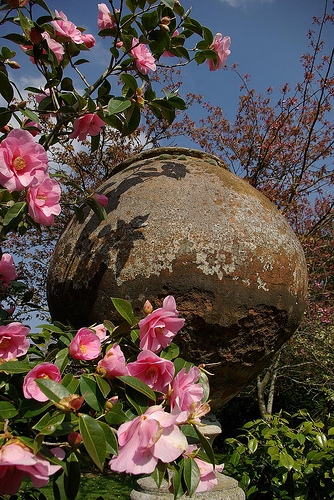
Now to the fun stuff. As I mentioned before, the Celtic tradition honors Brigid as Mary’s midwife, Jesus’ wet nurse, and his fostermother. “Time” was not a fixed, linear progression for the Celtic people. The material world and spiritual world intertwined in and out of each other, and there were thin places were one could cross from one to another with time running differently. This is why the legend of Brigid at the birth of Jesus was not a big deal for the Celts. The material and spiritual were not separate worlds in their thought. I also like this legend because, being the post-modern that I am, I like the idea of putting yourself into the story. Where am I in the grand story of God’s people? How is this story, my story? How is my story now becoming a part of the whole story? Brigid went on to become the spiritual mid-wife to Celtic women giving birth, and the midwife called Brigid into the house to assist in the birth.

Back before the stories of Brigid helping Mary and hanging her cloak on a sunbeam to dry out, Brigid was a goddess of the Celtic pantheon. She was the goddess of poets, blacksmiths, and healers. She was a triple goddess that manifests as maiden, mother, and crone. The fair maiden to poets, the mother creating to blacksmiths, and the old wise woman who knows how to heal. She has long been the symbol of spring coming to the land and the arrival of more light during this time of the year. February 1 is her day, and she was called on to protect the sheep who at this time would be carrying lambs. In the Christian tradition she is remembered for being able to coax cows into milking, and for being able to churn butter for everyone who needed it.

Milking cows and churning butter brings us back into the everyday realm. There is a strong domestic atmosphere in the stories of St. Brigid. Brigid’s life revolves around the home: giving away food to the poor, churning butter to feed all those who lived in the area, sweeping the floor, sewing, and herding both cattle and sheep. She kept her monastery in good order for visitors. Her love for domesticity naturally led to her generous hospitality. There was always food, clothing, and a bed in her house for those who needed it. Like so many women, Brigid wanted a well-run house where her family (her nuns) would have a nice home, and those who visited would find refuge. I am surprised at how domestic I’ve become in the last few years. But I’ve come to realize that I’ve become like Brigid. I want a clean, orderly house that can be a home and refuge for my husband and I. I also want to extend hospitality to our friends and give them a place to come eat, drink, and be merry. I also want them to find a refuge for awhile, rest and have fun while they are under our roof.

As the light comes back this spring, let us remember Brigid: a woman committed to her God, to helping the poor, and to taking care of all who came to her. She established a community that became a light to all who wanted to come pray, learn, work, or needed shelter and food. She worked hard and believed that everyone was part of the kingdom of God, and for that reason alone should be treated with respect and cared for. Everyone should have a home they can come to. There is room at the table for all. There is enough food to go around. And if not Brigid will be seen whispering in the ears of her milk cows.

A Collect for the Feast of St. Brigid:

Everliving God, we rejoice today in the witness of your servant Brigid of Kildare, who served as courageous leader and mentor, faithfully shepherding both men and women in her monastery and guiding them into holiness of life: Inspire us with life and light, and give us perseverance to serve you in our own day. This we ask in the name of the Holy and Undivided Trinity, one God, in glory everlasting. Amen. (From The Saint Helena Breviary, Personal Edition, 281).

Here are two other wonderful posts about Brigid:

A Habit of Wildest Bounty: Feast of St. Brigid at Jan Richardson’s The Painted Prayerbook.
Celtic Prayer: Brigid, Comrade-Woman by Elizabeth Cunningham at The Virtual Abbey.

Sphere: Related Content

Jean Wise reminded me on her blog that today was the commemoration day of Dorcas, Lydia, and Phoebe. Who you  may ask? Let me tell you all about them:

Dorcas

Now in Joppa there was a disciple whose name was Tabitha, which in Greek is Dorcas. She was devoted to good works and acts of charity. At that time she became ill and died. When they had washed her, they laid her in a room upstairs. Since Lydda was near Joppa, the disciples, who heard that Peter was there, sent two men to him with the request, ‘Please come to us without delay.’ So Peter got up and went with them; and when he arrived, they took him to the room upstairs. All the widows stood beside him, weeping and showing tunics and other clothing that Dorcas had made while she was with them. Peter put all of them outside, and then he knelt down and prayed. He turned to the body and said, ‘Tabitha, get up.’ Then she opened her eyes, and seeing Peter, she sat up. He gave her his hand and helped her up. Then calling the saints and widows, he showed her to be alive. This became known throughout Joppa, and many believed in the Lord (Acts 9:37-42).

You almost miss Dorcas’ story. After all most of Acts 9 is taken up with Saul’s conversion (later to become the apostle Paul) to Christianity after leading the persecution against the early church. So after Godde literally threw Saul off his ass (sorry I just cannot resist that one), he went blind, was healed and started preaching, the focus of the story quietly changes to Dorcas. By the time we meet her, she has died. This is a great lost to her community because she took such good care of them. And she took very good care of those who were considered the least of these: widows. Woman without a husband had no social standing at this time. They were normally destitute women who were forced to beg or to become prostitutes to support themselves and their children. If a woman did not have family at this time, she was in a very precarious place. Dorcas made sure these women had clothes. Now when the story tells us that Dorcas made the clothes, it means a little bit more than she cut some material and sewed it. First she would have to spin the fiber into thread then weave it on her loom for the tunics and clothing she made. This was truly a labor of love on her part to make sure those in her community were at least dressed. She may have also weaved pieces for local merchants to sell in order to support herself (there is no mention of a husband). As long as a woman had a loom and access to wool or flax, she could make a living. Apparently not all the widows Dorcas knew had their own looms to make their own clothes or clothing to sell. Dorcas made sure they had the clothing they needed to survive.

Her illness and death was a big loss to the community, so they sent messengers to a nearby town because they heard Peter was there. Peter came, and the widows showed him the clothing Dorcas had made them. Peter responded to their grief. After sending everyone outside, he prayed and then said to her, “Tabitha get up.” She rose from the dead and was restored to her community. News spread. More people believed in Godde.

Lydia

We set sail from Troas and took a straight course to Samothrace, the following day to Neapolis, and from there to Philippi, which is a leading city of the district of Macedonia and a Roman colony. We remained in this city for some days. On the sabbath day we went outside the gate by the river, where we supposed there was a place of prayer; and we sat down and spoke to the women who had gathered there. A certain woman named Lydia, a worshipper of God, was listening to us; she was from the city of Thyatira and a dealer in purple cloth. The Lord opened her heart to listen eagerly to what was said by Paul. When she and her household were baptized, she urged us, saying, ‘If you have judged me to be faithful to the Lord, come and stay at my home.’ And she prevailed upon us (Acts 16:11-15).

Paul and his traveling companions arrived in Philippi. But there was no synagogue for them to worship at, so they decided to go to the river on the Sabbath where there was a place of prayer. Lydia was at the river. She was “a worshiper of God,” and listened to Paul’s teachings. In fact, we are told “the Lord opened her heart to listen eagerly to what was said by Paul.” In the next verse she and her household were baptized, and she urged Paul and his travelers to stay in her house. Lydia was the first convert to Christianity in Europe.

Lydia was a businesswoman, “a dealer of purple cloth” from Thyatira. Purple dye was a symbol of power and honor in the ancient world, and it was the most expensive and sought after dye in the Roman world. Thyatira was the capitol of the industry and renowned for its purple dyes. One had to have plenty of capital to deal in purple dye and the making of purple garments for sale. Lydia was a career woman, rich, the head of her household, and Acts 16:40 implies that by the end of Paul’s stay in Philippi a new church was meeting in Lydia’s home. All of this could mean that Lydia was the overseer or pastor of the first church plant in Europe.

Phoebe

I commend to you our sister Phoebe, a deacon of the church at Cenchreae, so that you may welcome her in the Lord as is fitting for the saints, and help her in whatever she may require from you, for she has been a benefactor of many and of myself as well (Romans 16:1-2).

Paul highly commended and respected Phoebe. He called her a “sister,” “deacon,” and “benefactor” to the church at Cenchreae as well as a sister and benefactor to Paul.

The odd thing about diakonos or “deacon” being used to describe Phoebe is that it is the masculine form of the word used to describe a woman. It is the same word Paul uses when he calls Timothy and Titus “servants” or “deacons” (or pastors) of their respective churches. Another thing that makes this phrase odd is that Phoebe is called the “deacon of the church of Cenchreae.” This is the only place in the New Testament where diakonos is followed by a specific congregation. This is the only place linking a specific person’s ministry with a specific church. This seems to indicate that Phoebe served as a deacon in the church at Cenchreae.

Paul uses another word to describe Phoebe: prostatis. This is the only occurrence of the word in the New Testament. This word is normally translated so that it’s main meaning is not obvious. The normal translation is “helper” or someone who has helped. The basic and most obvious translation of the word from classical Greek is “patron” or “benefactor,” and women in this role, are well attested in the Roman world. In the Greco-Roman world wealthy women sponsored the arts, philosophers, writers, and politicians. They paid them and gave them the social standing they needed to succeed. Phoebe was a wealthy woman who served the church out of her means as the women in Luke 8 served Jesus out of theirs. For Paul to say that Phoebe was a benefactor to him meant that she had probably helped to support his missionary travels financially. It’s also very likely she was known in Rome, and she has the appropriate social status and clout to introduce Paul to the churches in Rome. Churches Paul had not had any dealings with, nor had he helped plant them.

Phoebe was a woman who had her own means, and served the church in a leadership role. Paul comes very close to commanding churches he had no hand in planting, and Christians, most of whom he had never met, to welcome her and provide anything she needed. She was not only a deacon and a benefactor in the church, but Paul himself had also benefited from her generous leadership.

Sphere: Related Content

Last week I visited the The Art Institute of Chicago. I wanted to see the Victorian Photocollage collection on disply before it left January 3. After wandering through the incredible art work of Victorian women, I decided to go see Carrevegio’s The Supper at Emmaus that is on loan to the institute to the end of this month. Then I wandered around the European Art section, and that’s when I saw her. She was looking straight at me with a raised sword in her hand, nude, a man’s head at her hip. I wondered which goddess this was, and I did think she was one of the Greek or Roman goddesses: she was sensual and powerful, a warrior goddess. I walked over to see who this warrior woman was, and I gasped, thought “Oh there’s  no way that’s her,” then read the panel again. It didn’t say Artemis, or Diane, or even Ishtar. This painting was of Judith, the apocryphal heroine of the inter-testament times. The Aprocrapha are the books in between the Hebrew Scriptures and the New Testament. They were written in Greek (not Hebrew), and Judaism and most Protestant religions don’t consider them Scriptures; Roman Catholics and the Orthodox churches do. Follow me after the break to see the painting that I have been obsessed with since I saw it, and why I was so surprised to see this was a painting of Judith.

(If you don’t like naked or nudity, then please do not continue. Any comments or emails along the lines of “If you were a real Christian you wouldn’t post that smut” will be deleted, period.)

Come, see my sovereign vision for this year…

(more…)

Sphere: Related Content

Company Girl logoHappy Friday Company Girls! The coffee is on and hot!

Dreaming in the New Year

If it wasn’t for Home Sanctuary I don’t know how neglected this poor little blog would be. But the reason I haven’t written much is that I’m thinking and dreaming and planning for the upcoming year. I’m dreaming what I want my business to become and who My Right People are and how much I want to help the people who come to me. So in the busyness of the week of getting to head out to see my family in Oklahoma, I’ve been dreaming and planning and spinning possible futures in the back of my head. What are Right People? It’s a concept Havi at The Fluent Self (shes @havi on Twitter) came up with (and I will let her explain):

Thought 2: Your stuff doesn’t have to be helpful for everyone.

It doesn’t.

It just needs to be helpful for the people who need it in that form in that moment.

Those are your Right People. The ones who need your voice.

Anyone who doesn’t find it helpful? Probably not one of your Right People. Or not ready yet.

That person can go. Be there for the ones who do need what you have to say.

That’s what I really want to focus in on this year: My Right People instead of throwing stuff all over the wall and seeing what sticks. I want to envision My Right People and help them and make this a safe place for them. So that’s whay I’ve been doing business wise. You can find out more about Right people here and here.

We Loved Our Presents!

Let me preface this section by saying that The Hubby and I always travel at Christmas to see family. This year we’re heading to Oklahoma to see mine. Before we go we have our own Christmas and open our presents. So we always open our presents from each other early. They all came in this week and were wrapped, so we opened them Wednesday. Actually the really, really cool present I got My Hubby came in that day, and I couldn’t wait to see what he thought of it! I bought him this beautiful singing bowl from Fabeku Fatunmise at Sankofa Song whom I met on Twitter (he’s @fabeku). The Hubby loved it! And the bowl sings so beautifully! Tracy really got the hang of it last night and all of these gorgeous tones were washing over me. So glad I met Fabeku and learned about his sound healing ministry! He also included his CD, which I am going to have to wrestle out of The Hubby’s hands so I can listen it. He also loved his other gifts: Buckley Balls from Think Geek, and a space-age pen that writes underwater and in zero gravity. This pen has been going up with the astronauts since 1965. I love My Geek.

I will preface my gifts with I LOVE TO COOK. When you’re a person who LOVES TO COOK, pots and pans that are on their last leg and about to give up the ghost are very depressing. So I’d dropped a hint or two about new pots and pans. You should see them Company Girls. They are beautiful: triply, with one of the triplies being stainless steel. The triply insures they heat evenly and hold the heat. They are bright and shiny; they are begging to be cooked in. I finally have a 5 quart Dutch Oven! (My previous set claimed a Dutch Oven but….um…..no.)  Squeee! I am so in love. I also adore my other gift. After we first married, Tracy would leave little red bows hidden all over the place for me to find. Mainly around coffee stuff so he knew I would find it. :) But then the red bows start collecting up and you don’t know what to do with them. My Honey came up with a solution; my second gift: The Red Bow Tree. It’s a beauitful fall resin tree with a little snow on the branches. So now when red bows start appearing in expected and unexpected places I have a place to put them. I always thought I never had a sappy romantic bone in my body, then My Hubby came along. Aah, the sap that man has turned me into. But it’s okay because he buys me kitchen stuff. :)

Getting ready to leave

I’ve ran errands most of the week to get ready to leave: bank, Target, The UPS Store, library, etc. I need to go to the grocery store today to pick up a couple of items we’ll need over the weekend and clean house. I don’t want the cat sitter to be walking into a mess. We take off to OK next week, and I won’t have internet connection, but that’s okay because I will have a boatload of holiday baking to do. My Mom doesn’t like to bake that much, but I love to, and since we’re coming in early, I am going to do all the Christmas baking! Whoo-hoo! Then there’s all the eating, opening presents, eating, catching up with everybody, eating: you know how it goes.

I wish all of you a Merry Christmas and Happy New Year!

Sphere: Related Content

(ED: I posted this article last year and ran it again as November 18 is St. Hilda’s Day. I added a collect for the day after the article.)

Hilda was one of the most powerful religious leaders in England during the 7th century. She was the abbess of a dual monastery of monks and nuns in Whitby. She held the same power of the bishops of the day, counseled kings, and five bishops came from her monestary.

Hilda was born in 614 CE to Hereric, the nephew of the king of Northumbria. She was baptized at the age of 13, and at the age of 33 she made the decision to become a nun. She was planning on joining her sister, Hereswith, who had established a convent on the fringe of Paris. She went to East Anglia where her nephew was king to prepare to sail to France, but Aidan, the apostle of Northumbria asked her to return to Northumbria. She obeyed, and he put her in charge of a small group of sisters on the north bank of the Wear river. After a year she was called to be the Abbess of Hartlepool. She stayed there for seven years until she built and organized a new monastery at Whitby on the dark cliffs overlooking the Northern Sea.

For thirty years Hilda was in charge of Whitby which was a monastery for both men and women. She ran a little city: there was a school, people to feed and clothe, travelers to provide lodging for, and discipline to be kept. She was not only in charge of monks and nuns, but also serfs who worked the land around the monastery. Kings, rulers, and bishops came to her for advice and counsel. In the midst of civil wars, Whitby spread the Christian faith. Whitby was a light shining for the gospel of love, forgiveness, and reconciliation in a time of wars and hatred. Venerable Bede tell us:

When she had for some years governed this monastery, wholly intent upon establishing a regular life, it happened that she also undertook either to build or to arrange a monastery in the place called Streaneshalch [Whitby], which work she industriously performed; for she put this monastery under the same regular discipline as she had done the former; and taught there the strict observance of justice, piety, chastity, and other virtues, and particularly of peace and charity; so that, after the example of the primitive church, no person was there rich, and none poor, all being in common to all, and none having any property. Her prudence was so great, that not only indifferent persons, but even kings and princes, as occasion offered, asked and received her advice; she obliged those who were under her direction to attend so much to reading of the Holy Scriptures, and to exercise themselves so much in works of justice, that many might be there found fit for ecclesiastical duties, and to serve at the altar (Ecclesiastical History, Book 4, Chapter XXIII).

While Hilda was the abbess of Whitby, it was one of the spiritual centers of England. She ruled a vast territory around Whitby, even providing soldiers in times of war. This was not unusual for the time. Abbesses managed their own realms and handled the finances to run them. Normally their domains were ruled by the pope bypassing the local bishop. Abbesses also “appointed local parish priests, heard confessions and cared for the material and spiritual needs of their people” (Grenz with Kjesbo, 41). There is also evidence that these women were ordained with the signs of the office of bishop: “the miter, ring, crosier, gloves, and cross”; however, later writings seem to replace “ordained” with “blessed,” obscuring the leadership role these women did play in the early church (ibid).

Hilda came to be known as “Mother” to her community. Many boys came to the monastery to be educated by her. Five of them became bishops: Bosa, Bishop of York; Hedda, Bishop of Dorchester and Winchester; Oftfor, Bishop of Worcester, and John of Gexham.

The story of Caedmon shows Hilda’s ability to bring out the best in others. Caedmon was always despondent because he could not sing after supper as was the custom of the day. One evening after leaving the festivities, he fell asleep and dreamed that Jesus came to him and told him to sing him a song about creation. The next day he told Hilda of the dream and sang the song he composed. Hilda recognized his talent and brought him into the monastery to devote himself to writing songs of Biblical stories in the Anglo-Saxon language. This is the first time since Latin became the official language of the western church that Scripture was translated into the vernacular. For the first time the Anglo-Saxons could learn and understand Scripture because it was in their own language. Caedmon’s poems are the earliest form of Anglo-Saxon poetry in existence (Baring-Gould 226).

In 664 CE HIlda hosted the first Synod of Whitby by order of the king of Northumbria, Oswy (who was her cousin). This synod was called by the king to peacefully solve the differences the Celtic tradition had with the Roman tradition, which included calculating the date of Easter. Historian Joanna McNamara notes, “Hild assumed a prestige usually reserved for bishops when she presided over the synod where the Irish and Roman churches competed for the allegiance of the Northumbrian king” (p. 127). The synod voted to align itself with the Roman branch of the Church. Although HIlda had been raised in the Celtic tradition, she obeyed and changed her monastery accordingly. This synod shaped the way Christianity would grow and develop in England, and “the fact that the synod, attended by all the leading churchmen of the isles, was held at a monastery ruled by a woman is a tribute to Hilda’s importance among her contemporaries” (Ranft, 118).

Hilda died in 680 CE after seven years of weak health. She was 66 when she died. These are Bede’s final words about her:

Thus this servant of Christ, Abbess Hilda, whom all that knew her called Mother, for her singular piety and grace, was not only an example of good life, to those that lived in her monastery, but afforded occasion of amendment and salvation to many who lived at a distance, to whom the fame was brought of her industry and virtue.

O God of peace, by whose grace the Abbess Hilda was endowed with gifts of justice, prudence, and strength to rule as a wise mother over the nuns and monks of her household, and to become a trusted and reconciling friend to leaders of the Church: Give us the grace to recognize and accept the varied gifts you bestow on men and women, that our common life may be enriched and your gracious will be done; through Jesus Christ our Savior, who lives and reigns with you and the Holy Spirit, one God, now and for ever. Amen. (From the The Saint Helena Breviary, Personal Edition)

Sources:

Sabine Baring-Gould Virgin Saints and Martyrs (Hutchinson and Company, London, England: 1900).

Shawna Renee Bound, Your Daughters Shall Prophesy: A Biblical Theology of Single Women in Ministry (unpublished thesis, 2002).

Edith Deen, Great Women of the Christian Faith (New York: Harper and Row Publishers, Inc., 1959; reprint Uhrichscile, OH: Barbour and Company, Inc.).

Stanley J. Grenz with Denise Muir Kjesbo, Women in the Church: A Biblical Theology of Women in Ministry (Downers Grove, IL: InterVarsity Press, 1995).

Kate Lindemann, “Hild of Streonshalh 614-680 CE” at Women-Philosphers.com (http://www.women-philosophers.com/Hild-of-Streonshalh.html accessed on November 20, 2008).

Joanna McNamara, Sisters in Arms–Catholic Nuns Through Two Millennia (Harvard University Press, Cambridge: 1996).

Patricia Ranft, Women and Spiritual Equality in Christain Tradition (Palgrave Macmillan, Houndmills, Basingstoke, Hampshire, England: 2000).

(No affliate links)

Sphere: Related Content

Next Page »